
Blog Posts

Estate Planning and Succession Laws for NRIs: A Comprehensive Guide
Estate Planning and Succession Laws for NRIs: A Comprehensive Guide Estate planning is not just a necessity; it's a critical step in securing your family’s future, ensuring the seamless transfer of assets, and minimizing legal complications. For Non-Resident Indians (NRIs), ...

Legal Challenges in NRI Marriages
Introduction Non-Resident Indian (NRI) marriages, while often joyous, can also bring a unique set of legal challenges. These challenges stem from cross-border legal systems, differing cultural expectations, and complex family dynamics. Understanding these issues is crucial for NRIs and their ...

Understanding Section 377 of the Indian Penal Code
Section 377 of the Indian Penal Code, a colonial-era law, criminalized "unnatural offenses," including consensual same-sex relationships. However, in a historic judgment on September 6, 2018, the Supreme Court of India decriminalized consensual homosexual acts between adults, marking a significant ...

Legal Framework for Virtual Court Hearings: Challenges and Opportunities
The advent of virtual court hearings marks a significant evolution in the judicial system, reshaping traditional courtroom dynamics. While this shift brings efficiency and accessibility, it also introduces unique challenges and opportunities that require careful consideration within the legal framework. ...

AI and Big Data in Legal Case Management
The integration of artificial intelligence (AI) and big data into legal case management is revolutionizing the way law firms and legal professionals operate. These technologies offer unprecedented opportunities to streamline processes, enhance decision-making, and improve client outcomes. The Role of ...
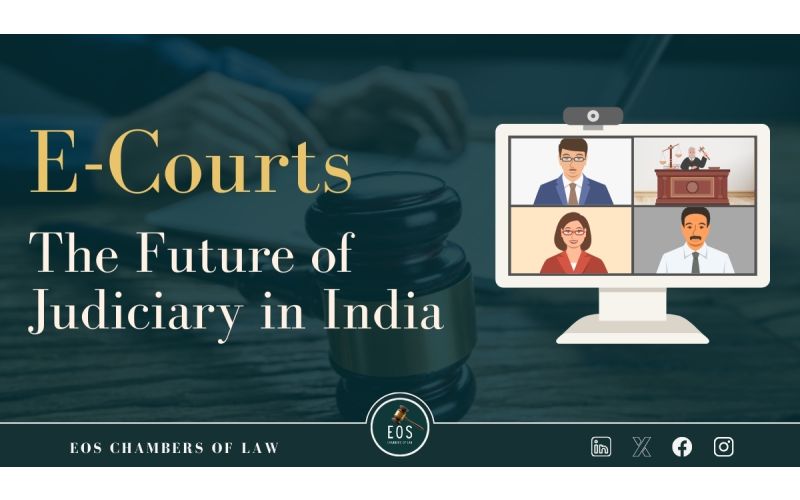
E-Courts: The Future of Judiciary in India
India’s judiciary is at a crossroads, with digitization and judicial reforms paving the way for increased efficiency, transparency, and accessibility. The e-Courts initiative, launched by the Indian judiciary under the National e-Governance Plan (NeGP), is a transformative step toward modernizing ...

Evolving Social and Constitutional Rights for LGBTQ+ Communities
The journey toward equality for LGBTQ+ communities in India has been marked by significant legal and social milestones. From the decriminalization of same-sex relationships to ongoing debates about marriage equality and adoption rights, the evolution of LGBTQ+ rights reflects the ...

Adoption Rights for LGBTQ+ Couples: Legal Challenges in India
We recognize that the right to adopt is one of the most debated and sensitive issues for LGBTQ+ couples in India. Despite increasing societal awareness and progressive judicial rulings, the Indian legal framework still presents substantial challenges for LGBTQ+ individuals ...

The Supreme Court’s Ruling on Same-Sex Marriage: What’s Next?
As legal professionals, we recognize the profound implications of the Supreme Court of India's recent deliberations on same-sex marriage. While the Court refrained from granting full marriage equality, the discussions have paved the way for significant legal discourse on LGBTQ+ ...

Protecting Confidentiality: A Legal Guide to Non-Disclosure Agreements (NDAs) in India
In a rapidly growing business ecosystem, safeguarding sensitive information is paramount. For Indian businesses, Non-Disclosure Agreements (NDAs) have become crucial legal tools to protect trade secrets, proprietary information, client details, and more. This article explores NDAs from an Indian legal ...
Post Categories
Featured Posts







Latest Posts








Latest Posts
Transfer Of Property Act | Rents Receivable Can Be Assigned By Debtor To Creditor As Actionable Claim: Supreme Court
Rents receivable by a borrower can be assigned to a lender as an "actionable claim" as per the Transfer of Property Act,1882(TPA), held the Supreme Court while deciding a dispute between the Infrastructure Leasing and Financial Services Ltd and the ...
Supreme Court Sides With Madras HC: Person Forwarding Social Media Messages Liable For Contents
The Madras High Court had noted that Shekher was a person of high stature and had many followers. It stated that he should have exercised more caution when forwarding messages. The Supreme Court refused to entertain an appeal challenging Madras ...

SC removes barrier, allows deaf lawyer Sarah Sunny to argue in sign language; interpreter’s speed amazes CJI, SG
The Supreme Court in India has started allowing sign language interpretation for hearing impaired lawyers, demonstrating that not everything needs to be spoken aloud in court. In a recent case, a deaf advocate was permitted to virtually argue with the ...

How to Legally Protect Your Business in India: A Complete Compliance Checklist (2026)
In today’s rapidly evolving regulatory environment, running a business in India is not just about growth—it is about staying compliant, protected, and risk-aware. Many businesses face legal challenges not due to intent, but due to lack of structured compliance systems. ...
Motor Accident Claims | No Right To Recovery For Insurer Merely Because Vehicle Owner Didn't Verify Driver's License : Supreme Court
The Supreme Court on Monday (30th October) held that an insurance company cannot claim that it is not liable to pay compensation in a motor vehicle accident claim just because the vehicle owner did not verify the genuineness of the ...

Indian Penal Code
The Indian Penal Code (IPC) is the official criminal code of India. It is a comprehensive code intended to cover all substantive aspects of criminal law. The code was drafted on the recommendations of the first law commission of India ...

Speak With Our
Get a Appointment