
Lessons Every Young Lawyer Should Learn Early

Lessons Every Young Lawyer Should Learn Early
|
The legal profession is more than a career—it is a lifelong commitment to justice, responsibility, and public service.
Every advocate begins their journey with ambition, knowledge, and the desire to make a meaningful impact. However, success in the legal profession is rarely determined by academic achievements alone. It is built through discipline, integrity, continuous learning, and an unwavering respect for the Rule of Law.
For young lawyers entering the profession, the early years often shape the rest of their careers. The habits they cultivate, the values they uphold, and the reputation they build become their greatest professional assets.
Here are some lessons every young lawyer should embrace from the very beginning.
1. Integrity Is Your Greatest Asset
Legal knowledge can be acquired through study.
Experience comes with time.
But integrity is a choice made every single day.
Clients may forget legal arguments, but they never forget honesty, professionalism, and trustworthiness.
A lawyer's reputation takes years to build and only moments to lose.
Never compromise your ethics for short-term success.
2. Learn the Facts Before the Law
Many young lawyers immediately begin researching legal provisions.
Experienced advocates begin by understanding the facts.
Every successful legal strategy starts with asking the right questions, carefully examining documents, and understanding the complete factual background.
Facts determine the law—not the other way around.
3. Courtroom Advocacy Begins Outside the Courtroom
Powerful arguments are rarely created spontaneously.
They are the result of hours of preparation.
Every brief deserves:
- thorough research,
- careful drafting,
- complete understanding of precedents,
- and meticulous attention to detail.
Confidence in court comes from preparation—not improvisation.
4. Respect the Court and the Profession
Advocates are officers of the Court.
Professional conduct reflects not only upon the individual but also upon the dignity of the legal profession.
Courtesy towards judges, colleagues, court staff, and clients strengthens both personal reputation and public confidence in the justice delivery system.
Respect is earned through conduct.
5. Never Stop Reading
Law evolves every day.
Constitutional interpretations develop.
Legislation changes.
Judicial precedents expand legal principles.
A lawyer who stops learning eventually stops growing.
Reading judgments regularly is one of the most valuable habits any advocate can develop.
6. Communication Is as Important as Legal Knowledge
Clients seek more than legal advice.
They seek clarity.
Complex legal concepts should be explained in simple, understandable language.
A lawyer who communicates effectively builds stronger client relationships and earns lasting confidence.
7. Patience Is a Professional Strength
Litigation demands resilience.
Cases may continue for years.
Success does not always arrive quickly.
Patience enables lawyers to remain objective, composed, and focused even during challenging circumstances.
The best advocates are often those who understand that perseverance is part of professional excellence.
8. Technology Is a Tool—Not a Substitute
Artificial Intelligence, legal databases, and digital platforms have transformed legal practice.
These technologies improve efficiency and research.
However, no technology can replace:
- legal reasoning,
- professional judgment,
- ethical decision-making,
- or courtroom advocacy.
Technology should enhance legal practice—not define it.
9. Build Relationships, Not Just a Network
The legal profession thrives on trust.
Professional relationships built on mutual respect often become lifelong collaborations.
Treat every client, colleague, senior advocate, junior, and court official with dignity.
Character travels faster than reputation.
10. Remember Why You Chose This Profession
The practice of law is ultimately about serving justice.
Every drafting assignment, client conference, legal opinion, or courtroom appearance contributes to the administration of justice.
Never lose sight of the responsibility that accompanies the privilege of being an advocate.
Professional success becomes meaningful only when it serves a larger purpose.
The Indian Legal Profession: A Constitutional Responsibility
The Constitution of India envisions justice as one of its highest ideals.
The legal profession plays a vital role in protecting constitutional rights, safeguarding the Rule of Law, and ensuring access to justice for every citizen.
The Advocates Act, 1961, together with the Bar Council of India Rules, reminds every advocate that professional excellence must always be accompanied by ethical conduct and responsibility.
For young lawyers, these principles should not merely be regulatory obligations—they should become guiding values throughout their careers.
Conclusion
Every accomplished advocate was once a young lawyer standing at the beginning of an uncertain yet rewarding journey.
Knowledge may earn opportunities.
Skill may win cases.
But character, integrity, and professionalism build a legacy.
The legal profession does not merely reward intelligence—it honours those who uphold justice with humility, responsibility, and unwavering ethical standards.
As young advocates begin their careers, one lesson remains timeless:
The finest lawyers are remembered not only for the cases they argued, but for the integrity with which they practised the law.
Post Categories
Featured Posts








Latest Posts








Latest Posts

Permanent Establishment (PE) Risk for Foreign Companies in India – 2026 Compliance Alert
Introduction: Why PE Risk Is a Serious Compliance Issue in 2026 India continues to witness heightened scrutiny of foreign companies operating through subsidiaries, employees, consultants, and digital presence. With increased data sharing, GST intelligence, and income-tax investigations, Permanent Establishment (PE) ...
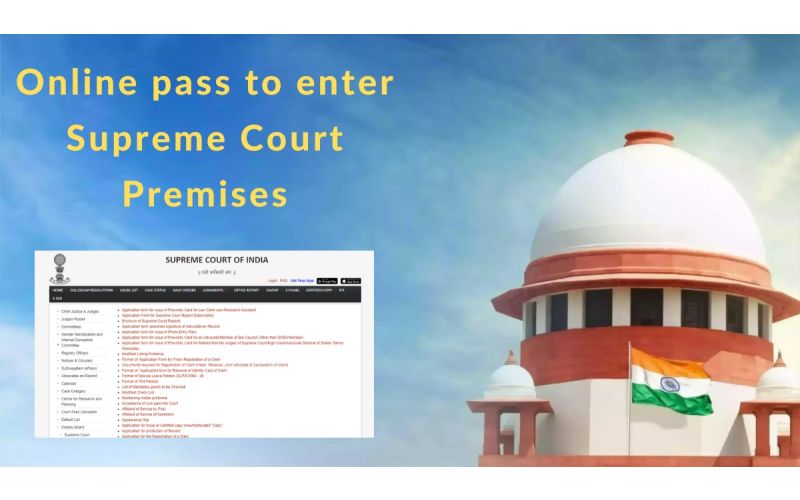
Get Online Pass To Enter Supreme Court Premises
The Supreme Court on Thursday launched ‘SuSwagatam’, a new initiative to generate entry passes online to help those who need to visit the court premises for various purposes. Chief Justice of India (CJI) D Y Chandrachud on Thursday announced the ...

Navigating Real Estate Challenges: A Solicitor's Insight
Introduction: In the intricate world of real estate, consumers often find themselves entangled in a web of complexities that demand legal acumen and guidance. As a solicitor passionate about serving my clients, I feel compelled to shed light on the ...

Muzaffarnagar slapping case: SC pulls up UP govt over delay in student counselling
After perusing the state reply Friday, the bench said it reflected that the counselling process had not been done yet. “It is not reflected, it is not being done,” said Justice Oka. The Supreme Court Friday pulled up the Uttar ...

Legal Framework for Virtual Court Hearings: Challenges and Opportunities
The advent of virtual court hearings marks a significant evolution in the judicial system, reshaping traditional courtroom dynamics. While this shift brings efficiency and accessibility, it also introduces unique challenges and opportunities that require careful consideration within the legal framework. ...

Understanding Indian Constitutional Laws: A Brief Overview
Introduction: Indian Constitutional Law is the backbone of the country's legal system, laying down the framework for governance, rights, and duties of citizens, and the functioning of various institutions. Enshrined in the Constitution of India, adopted on January 26, 1950, ...

Speak With Our
Get a Appointment