Motor Accident Claims | No Right To Recovery For Insurer Mer
Motor Accident Claims | No Right To Recovery For Insurer Merely Because Vehicle Owner Didn't Verify Driver's License : Supreme Court
|
The Supreme Court on Monday (30th October) held that an insurance company cannot claim that it is not liable to pay compensation in a motor vehicle accident claim just because the vehicle owner did not verify the genuineness of the driving licence of the driver employed. The Court said that the burden is on the insurance company to prove that there was a failure on the part of the vehicle owner in carrying out due diligence with regard to the drivers’ licence of the driver employed.
A bench of Justice CT Ravikumar & Justice Sanjay Kumar said that it would be impracticable to expect every person employing a driver to verify and confirm whether the driving licence produced by the driver is a valid and genuine one. “..once a seemingly valid driving licence is produced by a person employed to drive a vehicle, unless such licence is demonstrably fake on the face of it, warranting any sensible employer to make inquiries as to its genuineness, or when the period of the licence has already expired, or there is some other reason to entertain a genuine doubt as to its validity, the burden is upon the insurance company to prove that there was a failure on the part of the vehicle owner in carrying out due diligence apropos such driving licence before employing that person to drive the vehicle” the Apex Court said.
The Supreme Court also expressed shock at insurance companies pursuing such matters till the Apex Court, when the question of law is well settled.
“These legal propositions being so well settled, it is indeed shocking that insurance companies deem it appropriate to raise such pleas as a matter of course, without reference to the facts of the given case and/or the evidence available therein, and also consider it necessary to carry such matters in appeal till the last forum, unmindful of the wastage of valuable curial time and effort!” the Court said.
In the matter at hand, the Appellant Insurance Company approached the Apex Court challenging the order of the Delhi High Court that reversed the award passed by the Motor Accident Claims Tribunal granting the right of recovery to the Insurance Company. The Insurance Company filed the appeal before the Supreme Court, aggrieved by the denial of right of recovery from the vehicle owner.
The incident in question involved an accident where a person suffered fatal injuries due to the rash and negligent driving of a Tempo. The dependents of the injured, approached the Motor Vehicle Claims Tribunal for compensation. The Tribunal held that the insurance company would not be liable, due to a breach of the terms and conditions of the insurance policy by the vehicle owner.
The insurance company argued before the Apex Court that it was not liable to pay compensation, as the owner of the vehicle failed to verify the genuineness of the drivers’ licence, which turned out to be fake.
The Court observed that there is no requirement under Section 149(2)(a)(ii) of the Motor Vehicle Act,1988 or in the ‘Driver Clause’ of the insurance policy in question, that the owner of the insured vehicle must, as a rule, get the driving licence of the person employed as a driver verified and checked with the concerned transport authorities.
“Generally, and as a matter of course, no person employing a driver would undertake such a verification exercise and would be satisfied with the production of a licence issued by a seemingly competent authority, the validity of which has not expired. It would be wholly impracticable for every person employing a driver to expect the transport authority concerned to verify and confirm whether the driving licence produced by that driver is a valid and genuine one, subject to just exceptions” the Court said.
The Court observed that no evidence had been brought on record to show that the vehicle owner ought to have gotten the driving licence verified by the concerned transport authority. The Court observed that the insurance company failed to prove any willful breach by the vehicle owner and hence it would have no right to recover the compensation amount from the owners of the vehicle.
“In effect and in consequence, the petitioner-insurance company cannot blithely claim that the deceased vehicle owner did not conduct due diligence while employing Ujay Pal as a driver, by now insisting upon a condition which was neither prescribed in the statute nor in the insurance policy. More so, an unrealistic condition that every person employing a driver must get the driving licence of such driver verified and confirmed by the RTO concerned, irrespective of the actual necessity to do so,“ the Court observed.
The Court thus refused to interfere with the order of the Delhi High Court.
Case Title: IFFCO Tokio General Insurance Co. Ltd. V. Geeta Devi and others., Special Leave Petition (C) No. 19992 of 2023
Post Categories
Featured Posts


Latest Posts




Latest Posts
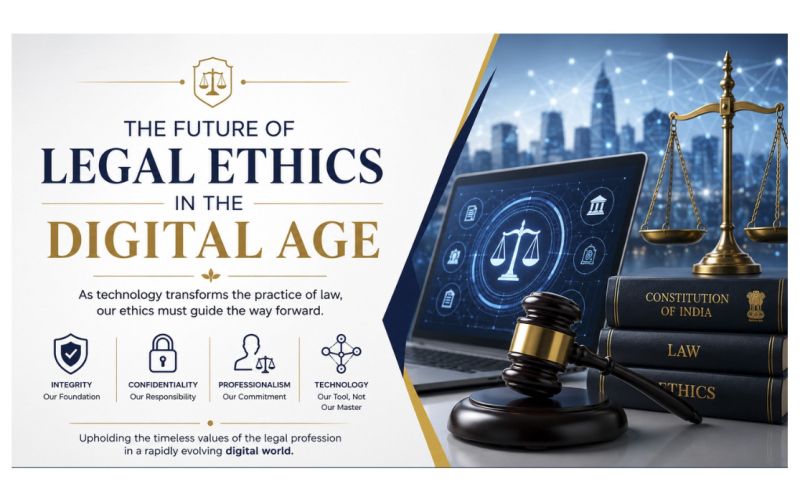
The Future of Legal Ethics in the Digital Age
The legal profession has never remained static. From handwritten pleadings to electronic filing, from physical libraries to digital legal databases, every generation has witnessed transformation in the practice of law. Today, however, the profession stands before perhaps its most significant ...

Understanding Section 11: Why Minors Cannot Contract | Know the Law
📘 Can a Minor Enter Into a Contract? ❌ Absolutely Not.As per Section 11 of the Indian Contract Act, 1872, a person must be of the age of majority (i.e., 18 years or 21 in certain guardianship cases) to enter ...
Legal Challenges in Cryptocurrency and Blockchain: Exploring the Evolving Legal Landscape
The rise of cryptocurrencies and blockchain technology has revolutionized the financial world, but it has also brought about a series of complex legal challenges. As more businesses and individuals adopt digital currencies and decentralized systems, governments and regulatory bodies are ...
Supreme Court Refuses To Interfere With HC Order Allowing Delhi University To Use CLAT Score For 5 Yr LLB Admissions In 2023-24
The Supreme Court on Monday(September 25) refused to interfere with the interim order passed by the Delhi High Court allowing the University of Delhi to admit students in the 5 year LL.B course of its Faculty of Law on the ...
S.106 Transfer Of Property Act | Onus On Tenant To Prove That Premises Was Leased For Manufacturing Purpose: Supreme Court
The Supreme Court Bench comprising Justice Aniruddha Bose and Justice Vikram Nath, has held that in order to attract the application of Section 106 of the Transfer of Property Act, 1882, which requires 6 months’ notice for termination of lease, ...
Can One Poorly Drafted Agreement Lead to Years of Litigation?
Why Smart Businesses Invest in Legal Clarity Before Signing, Not After a Dispute Begins In business, partnerships are built on trust.Transactions are built on opportunity.But when disputes arise, courts do not interpret trust—they interpret documents. One poorly drafted agreement, one ...

Speak With Our
Get a Appointment