
The Supreme Court’s Ruling on Same-Sex Marriage: What’s
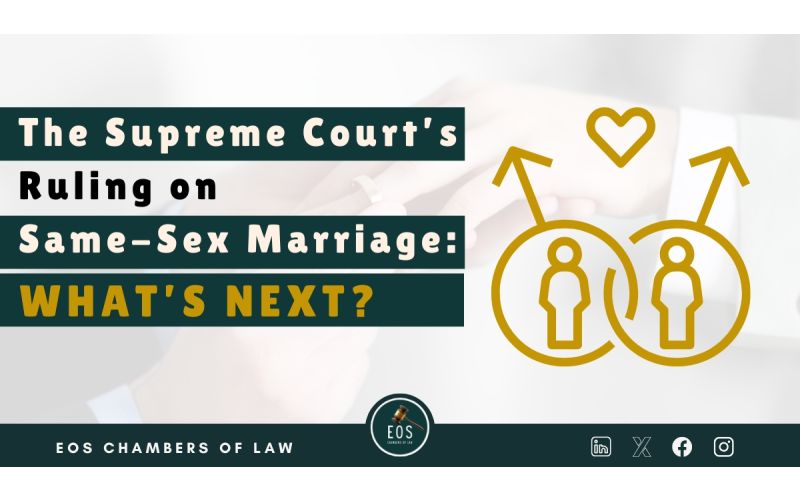
The Supreme Court’s Ruling on Same-Sex Marriage: What’s Next?
|
As legal professionals, we recognize the profound implications of the Supreme Court of India's recent deliberations on same-sex marriage. While the Court refrained from granting full marriage equality, the discussions have paved the way for significant legal discourse on LGBTQ+ rights in India.
Key Aspects of the Ruling:
- Civil Unions vs. Marriage Equality:
The Supreme Court acknowledged the right to love and partnership for LGBTQ+ individuals but stopped short of recognizing same-sex marriage under existing personal laws. The distinction between civil unions and marriage remains at the heart of the debate. - Call for Legislative Action:
The Court emphasized that changes to marriage laws fall within the purview of Parliament, encouraging the legislature to take proactive steps toward addressing the concerns of the LGBTQ+ community. - Parental and Social Acknowledgment:
An important aspect of the judgment was its focus on parental acceptance and the social challenges faced by LGBTQ+ individuals, urging society to be more inclusive.
Challenges Ahead:
- Recognition in Personal Laws:
The lack of recognition in personal laws such as the Hindu Marriage Act and the Special Marriage Act means that same-sex couples remain excluded from critical rights, including adoption, inheritance, and joint property ownership. - Policy Implementation:
Without legal backing, same-sex partnerships face hurdles in administrative processes like joint bank accounts or nomination rights in insurance and pension schemes. - Cultural Resistance:
Despite progressive judicial pronouncements, societal acceptance remains a significant challenge.
The Way Forward:
- Legislative Advocacy:
As legal practitioners, we urge policymakers to draft inclusive laws that reflect the evolving societal norms. Establishing frameworks for civil unions, if not marriage, could be a critical first step. - Corporate Inclusion:
Businesses can take the lead in promoting LGBTQ+ rights through policies that support workplace equality and benefits for same-sex partners. - Public Awareness Campaigns:
Continued efforts to educate society about LGBTQ+ issues will help foster acceptance and inclusion.
At EOS Chambers, we remain committed to advocating for equal rights and providing legal support to marginalized communities. The Supreme Court’s ruling has initiated an important conversation, but the journey toward equality requires collaborative efforts from all stakeholders.
Together, let’s work toward a future where love, dignity, and equality prevail.
Post Categories
Featured Posts







Latest Posts








Latest Posts
🤝 Mediation vs. Arbitration: Choosing the Right Path in ADR ⚖️
Alternative Dispute Resolution (ADR) has become an increasingly popular method for resolving disputes outside of traditional court litigation. Among the various ADR methods, mediation and arbitration stand out as two of the most commonly used approaches. While both aim to ...
Companies Act – Decision To Allot Additional Shares Cannot Be Set Aside Merely Because Promoters Have Also Benefited: Supreme Court
The Supreme Court has upheld the largely disproportionate allotment of rights share in favour of one group of shareholders of a private limited company, substantially increasing its shareholding percentage in the company over other group of shareholders.The bench comprisingJustices K.M. ...
𝐋𝐞𝐠𝐚𝐥 𝐄𝐭𝐡𝐢𝐜𝐬 & 𝐏𝐫𝐨𝐟𝐞𝐬𝐬𝐢𝐨𝐧𝐚𝐥𝐢𝐬𝐦: 𝐁𝐮𝐢𝐥𝐝𝐢𝐧𝐠 𝐓𝐫𝐮𝐬𝐭 𝐢𝐧 𝐭𝐡𝐞 𝐋𝐞𝐠𝐚𝐥 𝐈𝐧𝐝𝐮𝐬𝐭𝐫𝐲
🔹 𝑰𝒏𝒕𝒆𝒈𝒓𝒊𝒕𝒚. 𝑨𝒄𝒄𝒐𝒖𝒏𝒕𝒂𝒃𝒊𝒍𝒊𝒕𝒚. 𝑪𝒐𝒏𝒇𝒊𝒅𝒆𝒏𝒕𝒊𝒂𝒍𝒊𝒕𝒚. These pillars define a true legal professional. But in today’s fast-paced legal landscape, how do we maintain them? ✔ 𝑼𝒑𝒉𝒐𝒍𝒅𝒊𝒏𝒈 𝑪𝒍𝒊𝒆𝒏𝒕 𝑪𝒐𝒏𝒇𝒊𝒅𝒆𝒏𝒕𝒊𝒂𝒍𝒊𝒕𝒚: A lawyer’s duty is to protect sensitive information—breaching it damages trust. ✔ 𝑨𝒗𝒐𝒊𝒅𝒊𝒏𝒈 ...
Section 313 CrPC | 'Right To Remain Silent Not Be Used Against Accused' : Supreme Court Summarises 12 Principles
Recently, the Supreme Court, in a noteworthy judgment, while acquitting a woman accused of killing her own child and was convicted for murder and sentenced to life imprisonment, also decided the question of what may be required of the convict ...

#𝐊𝐧𝐨𝐰𝐓𝐡𝐞𝐋𝐚𝐰 | 𝐂𝐚𝐧 𝐘𝐨𝐮 𝐅𝐢𝐫𝐞 𝐚𝐧 𝐄𝐦𝐩𝐥𝐨𝐲𝐞𝐞 𝐖𝐢𝐭𝐡𝐨𝐮𝐭 𝐍𝐨𝐭𝐢𝐜𝐞?
YES! 🚫 𝐎𝐧𝐥𝐲 𝐢𝐧 𝐞𝐱𝐜𝐞𝐩𝐭𝐢𝐨𝐧𝐚𝐥 𝐜𝐚𝐬𝐞𝐬 — like proven misconduct, criminal activity, or if the employment contract specifically permits termination without notice. 🧾 𝐔𝐧𝐝𝐞𝐫 𝐭𝐡𝐞 𝐈𝐧𝐝𝐮𝐬𝐭𝐫𝐢𝐚𝐥 𝐃𝐢𝐬𝐩𝐮𝐭𝐞𝐬 𝐀𝐜𝐭, 1947, and state-specific Shops & Establishment Acts, arbitrary dismissal can invite legal ...

5 Mistakes People Make While Buying Property in India
Buying property is one of the biggest financial decisions in India.But are you sure you are not making a mistake that could cost you years of litigation or financial loss? Many buyers focus only on location and price, while ignoring ...

Speak With Our
Get a Appointment