
Understanding Indian Constitutional Laws: A Brief Overview
Understanding Indian Constitutional Laws: A Brief Overview
|
Introduction:
Indian Constitutional Law is the backbone of the country's legal system, laying down the framework for governance, rights, and duties of citizens, and the functioning of various institutions. Enshrined in the Constitution of India, adopted on January 26, 1950, it reflects the aspirations of the founding fathers to create a democratic and egalitarian society.
Key Features of Indian Constitutional Laws:
-
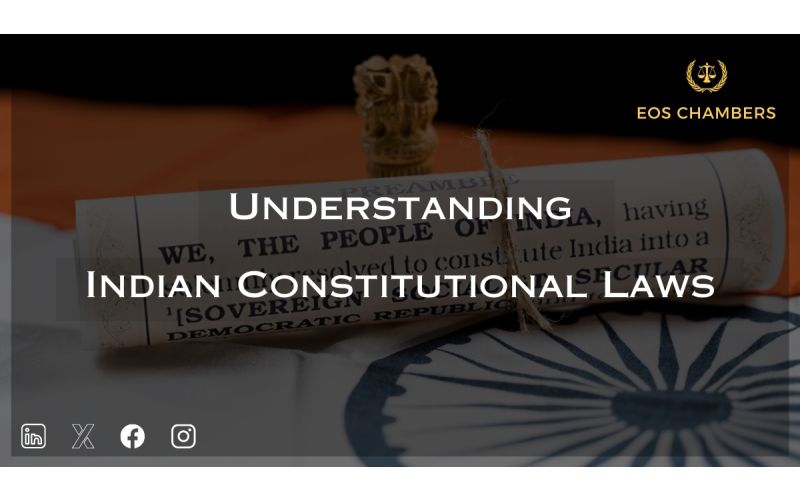
Preamble: The Preamble of the Indian Constitution sets out the ideals and objectives of the Constitution, including justice, liberty, equality, and fraternity. It serves as a guiding light for the interpretation and implementation of laws.
-
Fundamental Rights: Part III of the Constitution guarantees fundamental rights to every citizen, such as the right to equality, freedom of speech and expression, right to life and personal liberty, and right to constitutional remedies. These rights are enforceable by the courts and form the cornerstone of Indian democracy.
-
Directive Principles of State Policy: Part IV of the Constitution contains Directive Principles of State Policy, which are guidelines for the government to promote social justice, economic welfare, and other ideals. Though not enforceable by the courts, they are fundamental in the governance of the country.
-
Federal Structure: The Indian Constitution establishes a federal structure with a division of powers between the central government and the state governments. It delineates the legislative, executive, and judicial powers of the Union and the states to ensure a balance of power.
-
Independent Judiciary: The Constitution establishes an independent judiciary with the Supreme Court as the highest judicial authority. It acts as the guardian of the Constitution, ensuring its supremacy and protecting the rights of citizens through judicial review.
-
Amendment Procedure: The Constitution provides for its own amendment to adapt to changing circumstances. Amendments can be made by a special majority of both houses of Parliament, ensuring the flexibility and adaptability of the Constitution.
Conclusion:
Indian Constitutional Laws embody the principles of democracy, equality, and justice, guiding the nation towards progress and prosperity. With its robust framework and dynamic nature, it continues to evolve to meet the challenges of a changing world while upholding the values enshrined in its preamble. Understanding these laws is essential for every citizen to actively participate in the democratic process and contribute to the nation's growth and development.
Post Categories
Featured Posts








Latest Posts








Latest Posts

Startups and Legal Compliance: A Guide to Navigating Indian Laws
Navigating legal compliance is crucial for startups to establish a strong foundation and ensure sustainable growth. In India, understanding and adhering to applicable laws can be complex but essential. Here’s a concise guide to help startups stay compliant: 1. Incorporation ...

Legal Challenges in Cryptocurrency and Blockchain: Exploring the Evolving Legal Landscape
The rise of cryptocurrencies and blockchain technology has revolutionized the financial world, but it has also brought about a series of complex legal challenges. As more businesses and individuals adopt digital currencies and decentralized systems, governments and regulatory bodies are ...

75% Eligibility Condition For Admission To Sports Quota ‘Unwarranted & Discriminatory
The Supreme Court has held that the eligibility condition of minimum 75% marks does not promote the object of introducing the sports quota, and such criterion subverts the object and falls afoul of the equality clause in Article 14 of ...
SC Ruling On User Development Fee Provides Guidance For GST, Tax On Royalty
The SC had held that UDF collected by the DIAL is in the nature of statutory levy and the same would not be taken as consideration against any services.A recent judgment by the Supreme Court (SC) on the user development fee (UDF) collected by the Delhi International Airport Limited (DIAL) ...

Legal Due Diligence Before Buying a Business or Startup in India
Why Legal Due Diligence Is Critical In India, when you acquire a business or startup — whether through share purchase, asset purchase, merger, or strategic investment — you may also inherit: Undisclosed tax liabilities Pending litigation Regulatory non-compliance Hidden shareholder ...
Marriages Don’t Require Public Declaration: SC
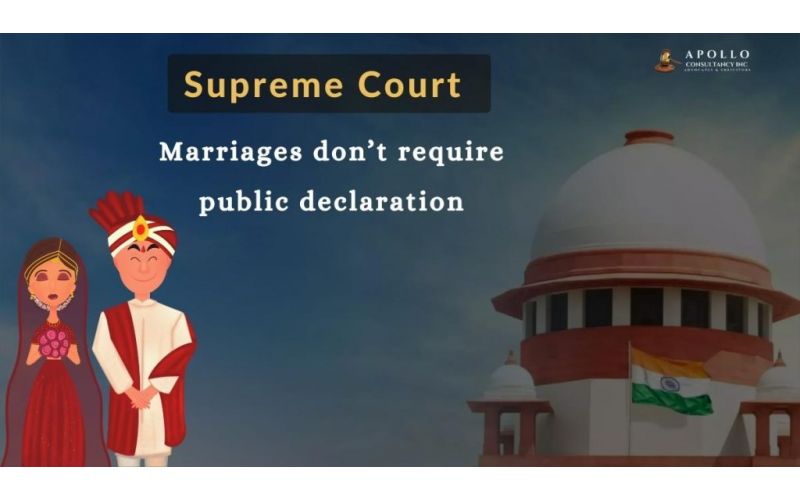
The Supreme Court of India has ruled that not all marriages require a public declaration or solemnisation Not every valid marriage requires a public declaration or solemnisation in a particular manner, the Supreme Court held on Monday, as it underlined ...

Speak With Our
Get a Appointment