
75% Eligibility Condition For Admission To Sports Quota ‘U

75% Eligibility Condition For Admission To Sports Quota ‘Unwarranted & Discriminatory
|
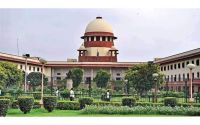
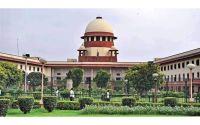
The Supreme Court has held that the eligibility condition of minimum 75% marks does not promote the object of introducing the sports quota, and such criterion subverts the object and falls afoul of the equality clause in Article 14 of the Constitution.
A bench of Justices S Ravindra Bhat and Aravind Kumar made the ruling as they recently considered a special leave petition filed against the order of the Punjab and Haryana High Court rejecting the petition which had questioned the imposition of a minimum 75 per cent aggregate marks as an eligibility condition (in the qualifying examination) for enabling a candidate to claim admission in engineering courses under the 2 per cent sports quota.
The appellant who did not secure the basic 75 per cent marks, had approached the High Court complaining that the eligibility condition was unrealistically high after one seat had fallen vacant in the Materials and Metallurgical Engineering branch in the PEC University of Technology.
The eligibility criterion for admission to engineering courses under sports quota mentioned that the candidate should have secured a minimum of 75 per cent marks in the Class 12 examination of the respective stream and Board.
Before the apex court, senior advocate P.S. Patwalia, appearing for the appellant, contended that the minimum eligibility condition of having acquired 75 per cent marks, defeats the objective of providing a sports quota because it assumes that sports persons – like other general candidates – would also have the same degree of academic excellence which is required of all other candidates.
In its judgment, the Supreme Court held that the exclusion of the petitioner and other like candidates, on the ground of their securing less than 75 per cent in the qualifying examination, was unwarranted and discriminatory.
It directed that the remaining seat(s) will be filled by the University in accordance with the sports policy of the UT of Chandigarh, after determining inter se sports merit of the candidates who had applied, but whose candidature was rejected on the ground of ineligibility due to their securing less than 75 per cent marks.
These candidates, however, should have qualified in terms of the immediately preceding academic year’s criterion, applicable for the balance sports quota seat(s), the top court clarified. It added that candidates who have been selected and given admission will not be disturbed.
Post Categories
Featured Posts



Latest Posts








Latest Posts
Grant Of Bail Can't Be Made Dependent On Surrender Of Co-Accused : Supreme Court
A Division Bench of the Supreme Court, while allowing a bail plea, held that the grant of bail to a co-accused person cannot be contingent on the surrender of another accused who is also pertinently the main accused in the ...

Remote Work and Employment Law in India: Navigating Legal Implications for Employers and Employees
Remote Work and Employment Law in India: Navigating Legal Implications for Employers and Employees The rise of remote work, accelerated by the COVID-19 pandemic, has fundamentally changed the way businesses operate and employees engage with their work. While remote work ...

NRIs and Taxation in India: Legal Tips for Compliance and Avoiding Disputes
Navigating the tax landscape in India can be challenging for Non-Resident Indians (NRIs). Understanding your tax obligations is crucial to avoid disputes and penalties. Here are some essential legal tips to help NRIs ensure compliance and protect their financial interests: ...

Builder–Buyer Disputes in India: Legal Remedies Beyond Court Litigation
Builder–buyer disputes have become one of the most common legal issues in India’s real estate sector. Delays in possession, unilateral changes in project plans, poor construction quality, refund refusals, and misleading commitments have affected thousands of home buyers across the ...

How to Legally Protect Your Business in India: A Complete Compliance Checklist (2026)
In today’s rapidly evolving regulatory environment, running a business in India is not just about growth—it is about staying compliant, protected, and risk-aware. Many businesses face legal challenges not due to intent, but due to lack of structured compliance systems. ...
Empowering NRIs: Facilitating Political Participation Through Voting Rights!
Introduction: In the digital age of globalization, the world is more interconnected than ever before. Non-Resident Indians (NRIs) are an integral part of this global community, contributing to economies, cultures, and societies around the world. However, despite their significant impact, ...

Speak With Our
Get a Appointment