
Row Over Services: Will Examine If Parliament Can Abrogate C
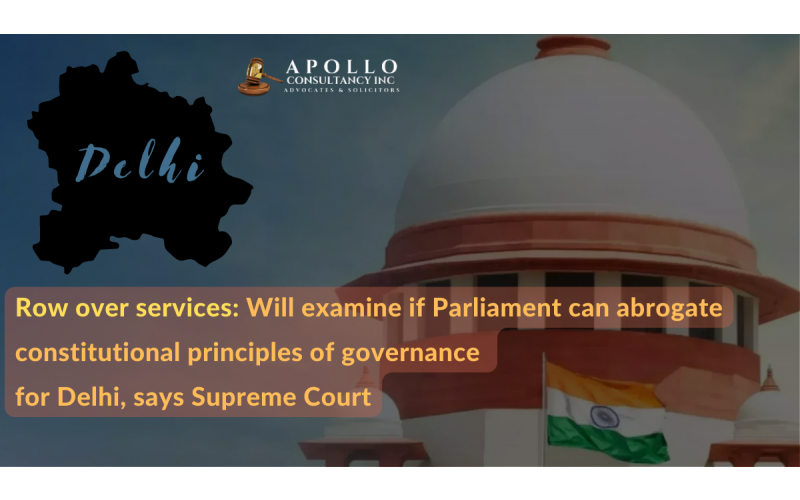
Row Over Services: Will Examine If Parliament Can Abrogate Constitutional Principles Of Governance For Delhi, Says Supreme Court
|
The Supreme Court has said a five-judge constitution bench will examine whether Parliament can “abrogate the constitutional principles of governance” for the Delhi government by making a law to take away its control over services. The Centre recently issued an ordinance on the Delhi services matter by exercising its powers under Article 239-AA, a special provision in the Constitution pertaining to the national capital.
The top court, which on Thursday referred to a constitution bench the :
(i) What are the contours of the power of Parliament to enact a law under Article 239-AA(7); and (ii) Whether Parliament in the exercise of its power under Article 239-AA(7) can abrogate the constitutional principles of governance for the National Capital Territory of Delhi (NCTD),” said the order passed by a bench of Chief Justice D Y Chandrachud and justices P S Narasimha and Manoj Misra.
A 10-page order, penned by the CJI, said there were two preliminary issues which arose for the consideration by a larger bench.
“The first is on the import of Section 3A (of the ordinance). Section 3A removes Entry 41 (services) of List II (State List) from the legislative competence of the NCTD. On the exclusion of Entry 41 from the NCTD’s legislative power, the government of the NCTD ceases to have executive power over services because executive power is co-terminus with the legislative power,” the order said.
The issue, therefore, is whether a law could completely remove Delhi government’s executive power over services, it said, adding that the aspect of services under Entry 41 was also “interconnected with the validity of Section 3A” of the ordinance.
While referring the Delhi government’s plea to the constitution bench, it had rejected the vehement submission of the city dispensation that there was no need for referring the matter to a constitution bench as it will “paralyse the whole system” during its pendency.
On Thursday, the bench raised a raised a query with regard to the ordinance and said it took away the control of services from the control of the Delhi government.
The Constitution excludes three entries of List II (State List) related to police, law and order and land from the control of the Delhi government, it said.
“What you (Centre) have effectively done is that the Constitution says barring three entries, Delhi legislative assembly has the power. But, the ordinance takes away Entry 41 (services) (of the List II) also from the power. That is the effect of Section 3A of the ordinance,” the bench said.
The bench had recently issued notices to the Centre and the Delhi lieutenant governor on the plea while refusing to grant an interim stay on the ordinance on control over services in the national capial.
Article 239AA deals with special provisions with respect to Delhi in the Constitution and its sub-article 7 says, “Parliament may, by law, make provisions for giving effect to, or supplementing the provisions contained in the foregoing clauses and for all matters incidental or consequential thereto.”
It also says any such law made under the article “shall not be deemed to be an amendment of this Constitution for the purposes of Article 368 notwithstanding that it contains any provision which amends or has the effect of amending, this Constitution.”
The Centre had on May 19 promulgated the Government of National Capital Territory of Delhi (Amendment) Ordinance, 2023, to create an authority for transfer and posting of Group-A officers in Delhi.
Source
Source
Post Categories
Featured Posts



Latest Posts








Latest Posts
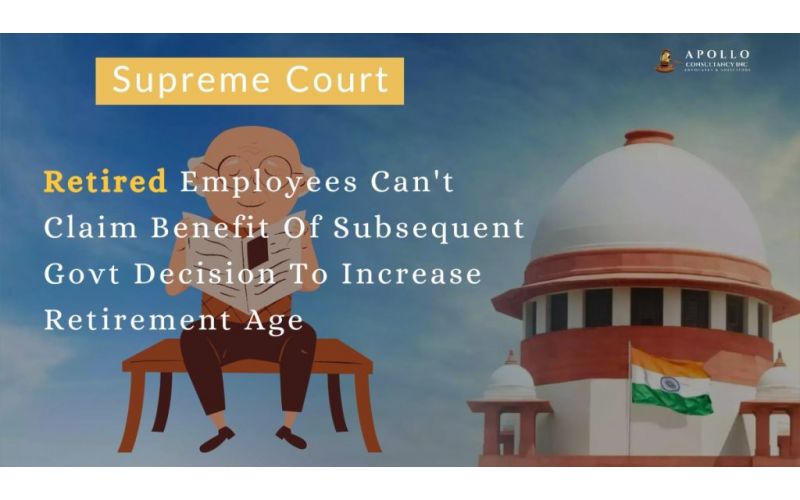
Retired Employees Can’t Claim Benefit Of Subsequent Govt Decision To Increase Retirement Age : Supreme Court
The Supreme Court has dismissed a petition filed by a group of teachers in Homeopathic Medical Colleges in Kerala seeking increase of their retirement age from 55 years to 60 years at par with the teachers of other Medical Colleges.The ...
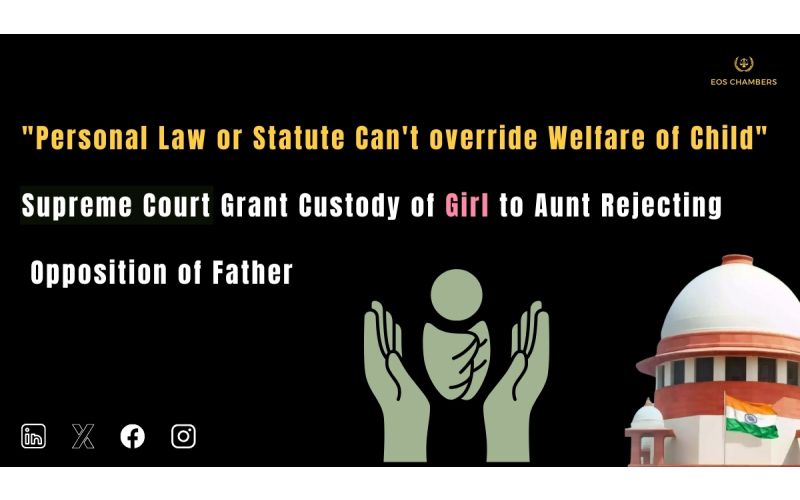
'Personal Law Or Statute Can't Override Welfare Of Child' : Supreme Court Grants Custody Of Girl To Aunt Rejecting Opposition Of Father
The Supreme Court, while granting custody of a minor child to the her aunt despite opposition from the father, held that the personal law or statute couldn't override the welfare of the child while deciding the custody of the child. ...
S.106 Transfer Of Property Act | Onus On Tenant To Prove That Premises Was Leased For Manufacturing Purpose: Supreme Court
The Supreme Court Bench comprising Justice Aniruddha Bose and Justice Vikram Nath, has held that in order to attract the application of Section 106 of the Transfer of Property Act, 1882, which requires 6 months’ notice for termination of lease, ...
𝐍𝐚𝐯𝐢𝐠𝐚𝐭𝐢𝐧𝐠 𝐏𝐫𝐨𝐩𝐞𝐫𝐭𝐲 𝐃𝐢𝐬𝐩𝐮𝐭𝐞𝐬 𝐢𝐧 𝐈𝐧𝐝𝐢𝐚: 𝐀 𝐋𝐞𝐠𝐚𝐥 𝐆𝐮𝐢𝐝𝐞 𝐟𝐨𝐫 𝐍𝐑𝐈𝐬 🏡
Property disputes can be particularly challenging for Non-Resident Indians (NRIs) who may face issues like illegal possession, inheritance conflicts, and unclear property titles. Managing these disputes from abroad adds further complexity. Here are some essential legal tips for NRIs to ...
Corporate Social Responsibility and Legal Obligations - Navigating the Legal Aspects of CSR Initiatives
Corporate Social Responsibility (CSR) has evolved from a voluntary initiative to a crucial component of modern business strategy. In today's globalized economy, companies are expected to contribute positively to society while maintaining profitability. However, CSR is not just about corporate ...
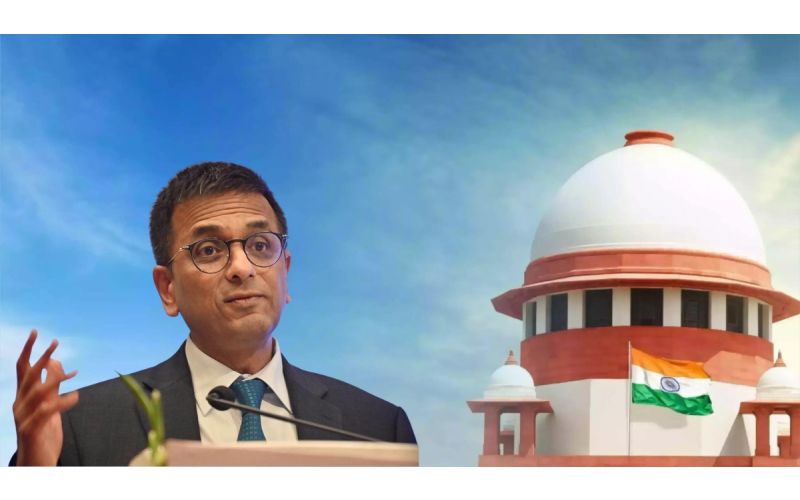
New Training Programme For New Lawyers. By Chief Justice Of India DY CHANDRACHUD 🇮🇳
‘Judges can’t burden lawyers due to uneasiness with technology’: CJI Chandrachud- CJI Chandrachud appealed to judges to continue hybrid hearings, saying that this was not just meant for the Covid-19 pandemic period. Chief Justice of India (CJI) DY Chandrachud on ...

Speak With Our
Get a Appointment