
Remote Work and Employment Law in India: Navigating Legal Im
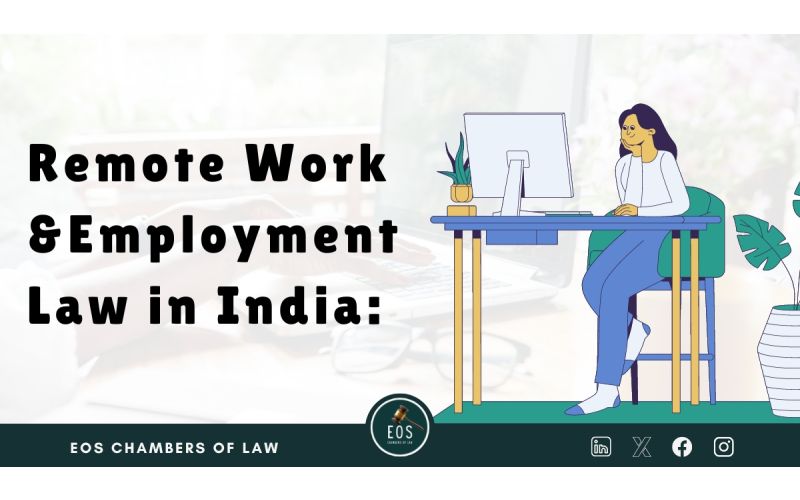
Remote Work and Employment Law in India: Navigating Legal Implications for Employers and Employees
|
Remote Work and Employment Law in India: Navigating Legal Implications for Employers and Employees
The rise of remote work, accelerated by the COVID-19 pandemic, has fundamentally changed the way businesses operate and employees engage with their work. While remote work offers flexibility and new opportunities, it also introduces a host of legal implications, particularly under Indian employment law. This article explores the key legal considerations of remote work, focusing on contract adjustments, employee rights, and employer responsibilities.
1. Employment Contracts: Adjustments and Considerations
When transitioning to remote work, it is crucial for employers to review and, if necessary, revise employment contracts. Contracts should clearly outline the terms and conditions of remote work, including:
- Work Location: Specify that the employee will work from home or another remote location. This helps in defining the scope of the employment and in applying relevant local laws.
- Work Hours: While remote work offers flexibility, the contract should define work hours or the expectation of availability to avoid disputes related to working overtime or during odd hours.
- Data Security and Confidentiality: Remote work increases the risk of data breaches. Employers should include clauses that require employees to follow company protocols for data security, including the use of secure connections and safeguarding company devices.
- Reimbursement of Expenses: The contract should address whether employees will be reimbursed for remote work-related expenses, such as internet costs or home office equipment.
Failure to adjust contracts to reflect the reality of remote work can lead to legal disputes and confusion regarding the rights and responsibilities of both parties.
2. Employee Rights: Protection and Compliance
Under Indian law, employees have certain rights that remain intact regardless of their work location. Employers must ensure that these rights are protected in a remote work environment:
- Wages and Benefits: Employees are entitled to the same wages, benefits, and allowances they would receive if working on-site. Employers cannot reduce compensation simply because the employee is working remotely.
- Health and Safety: The Occupational Safety, Health, and Working Conditions Code, 2020, emphasizes the employer's responsibility to provide a safe working environment. While traditionally applicable to physical workplaces, employers may still bear some responsibility for ensuring that remote work environments do not pose significant health risks.
- Right to Disconnect: Though not yet codified in Indian law, the concept of the "right to disconnect" is gaining traction globally. This principle suggests that employees should not be expected to respond to work communications outside of agreed-upon work hours. Employers should respect this to avoid burnout and potential legal claims of overwork.
- Privacy: Employees working remotely should be protected from undue surveillance. Employers must balance the need to monitor work with respect for the employee’s privacy, ensuring compliance with any applicable privacy laws.
3. Employer Responsibilities: Compliance and Best Practices
Employers in India have a legal responsibility to comply with various labor laws, even in a remote work setting. Key areas of focus include:
- Compliance with Labor Laws: Indian labor laws, such as the Payment of Wages Act, 1936, and the Industrial Employment (Standing Orders) Act, 1946, continue to apply to remote workers. Employers must ensure that they are in compliance with these laws, particularly regarding wage payments and conditions of employment.
- Equal Opportunity and Non-Discrimination: Remote work should not lead to discrimination. Employers must ensure that remote workers have equal access to opportunities for advancement, training, and other benefits as their on-site counterparts.
- Taxation and Social Security Contributions: Employers must continue to comply with taxation laws, including deducting and remitting TDS (Tax Deducted at Source) from salaries. They must also ensure that contributions to social security schemes like the Employees’ Provident Fund (EPF) are maintained.
4. Dispute Resolution: Addressing Remote Work Conflicts
Disputes related to remote work can arise, particularly around issues like overtime pay, working conditions, and data security breaches. Employers should have clear policies in place for resolving such disputes. This may include:
- Grievance Redressal Mechanism: A robust mechanism should be established to address any grievances employees may have regarding remote work conditions.
- Arbitration Clauses: Consider including arbitration clauses in employment contracts to provide a clear pathway for resolving disputes outside of the court system.
5. The Future of Remote Work and Legal Evolution
As remote work continues to evolve, so too will the legal landscape. The Indian government may introduce new regulations specifically addressing remote work, given its increasing prevalence. Employers should stay informed about potential changes in legislation and be prepared to adapt their policies accordingly.
In conclusion, remote work in India brings both opportunities and challenges from a legal perspective. Employers must proactively adjust employment contracts, respect employee rights, and fulfill their legal responsibilities to ensure a smooth and compliant remote work experience. As the practice becomes more widespread, staying ahead of legal developments will be crucial for both employers and employees navigating this new frontier of work.
Post Categories
Featured Posts








Latest Posts








Latest Posts

Law's Outcome Depends On Who Wields The Law In Their Hands : CJI DY Chandrachud
Chief Justice of India, DY Chandrachud recently spoke on how justice and the outcome of the law depends on who is wielding the law in their hands. When the law is wielded with compassion, it is capable of producing justice, ...

What Should You Do if a False Criminal Case or FIR is Filed Against You in India?
What should you do if you suddenly discover that a criminal case or FIR has been filed against you based on false allegations? Unfortunately, misuse of criminal law to settle personal disputes, business conflicts, or property disagreements is not uncommon ...

Children Of Invalid Marriages Have Right In Their Parents’ Share In Hindu Joint Family Property : Supreme Court
The Supreme Court on Friday (September 1) pronounced a judgment recognizing the rights of children born out of invalid marriages in their parents’ share in Hindu joint family property. The Court held that children born out of void/voidable marriages are ...

SC : Divorce Can Be Granted On ‘Grounds Of Irretrievable Breakdown’
The Supreme Court on May 1 held that it can use its extraordinary powers to do “complete justice” under Article 142 of the Constitution and dissolve a marriage on the ground of ‘irretrievable breakdown’ of the union. Usually, the apex ...
Dividend Income From Indian Entity's Establishment In Oman Having ‘Permanent Establishment’ Status Under DTAA Not Taxable In India: Supreme Court
The Supreme Court has held that if an Indian Entity’s Establishment is operating in Oman and has a ‘Permanent Establishment’ status under Double Taxation Avoidance Agreement (“DTAA”), then the dividend income received by the Indian Entity from such Establishment would ...
Empowering NRIs: Facilitating Political Participation Through Voting Rights!
Introduction: In the digital age of globalization, the world is more interconnected than ever before. Non-Resident Indians (NRIs) are an integral part of this global community, contributing to economies, cultures, and societies around the world. However, despite their significant impact, ...

Speak With Our
Get a Appointment