
Supreme Court Says MP, MLA Can’t Claim Immunity From Prose
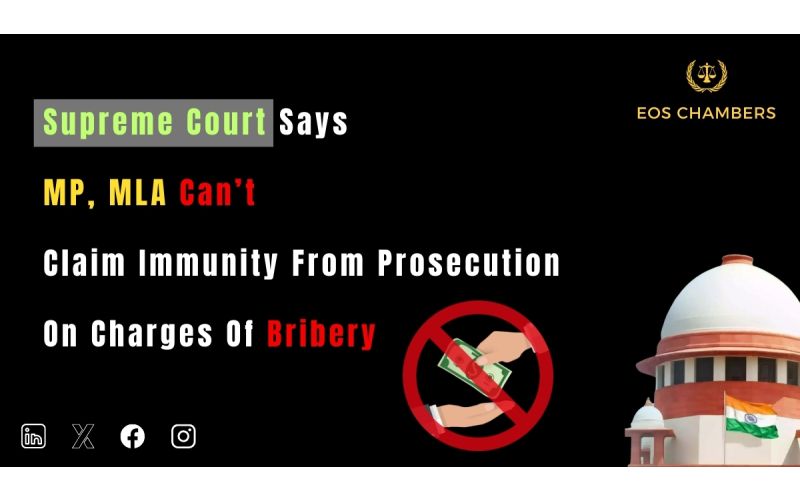
Supreme Court Says MP, MLA Can’t Claim Immunity From Prosecution On Charges Of Bribery
|
The seven-judge Constitution bench of the Supreme Court said it disagreed with the judgment in PV Narasimha and the judgment in PV Narasimha which grants immunity to legislators for allegedly bribery for casting a vote or speech has “wide ramifications and overruled”.
The Supreme Court’s seven-judge bench in its unanimous view overruled the 1998 PV Narasimha Roa judgment case which granted immunity to MPs/MLAs from prosecution to bribery for voting in Parliament.
While hearing the matter, the Chief Justice said, “We have independently adjudicated on all aspects of the controversy. Do Parliamentarians enjoy immunity? We disagree and overrule majority on this aspect.”
A bench of seven judges headed by the Chief Justice of India in October last year reserved the order after hearing the submissions. Other judges on the bench are Justices AS Bopanna, MM Sundresh, PS Narasimha, JB Pardiwala, Sanjay Kumar, and Manoj Misra.
Earlier, a five-judge bench referred the matter to a larger bench of seven judges to deal with the issues, observing that it was an important issue having a significant bearing on the morality of polity.
The court said that the purpose of Article 105(2) and Article 194(2) is to ensure that members of parliament and state legislatures are able to discharge duties in an atmosphere of freedom without fear of the consequences.
On March 7, 2019, a three-judge bench of the Supreme Court referred the matter to a larger bench, considering the wide ramifications of the question that has arisen. The court had then observed that the doubts raised and the issue being a matter of substantial public importance, the matter required to be considered by a larger bench.
The issue was raised while the court was hearing a petition filed by politician Sita Soren. Sita Soren has sought the criminal prosecution launched against her to be nullified on a claim of immunity under Article 194(2) of the Constitution of India.
The charges against Sita Soren were that she had allegedly accepted a bribe to vote in favour of a particular candidate in the Rajya Sabha election that was held sometime in 2012 in Jharkhand.
Post Categories
Featured Posts



Latest Posts








Latest Posts

NRI Divorce and Child Custody Rights in India: What You Must Know
When NRIs (Non-Resident Indians) go through a divorce involving children, legal rights around custody, visitation, and jurisdiction often become complex. Key Points: Jurisdiction Matters: If the marriage was registered in India or the couple last lived here, Indian courts can ...
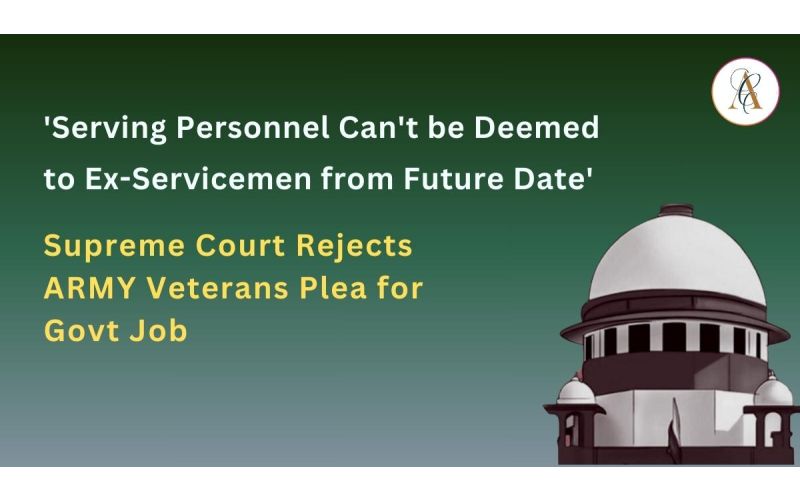
'Serving Personnel Can't Be Deemed To Ex-Servicemen From Future Date' : Supreme Court Rejects Army Veterans Plea For Govt Job
Serving Armed Forces officers can't be deemed to be Ex-Servicemen from a prospective date, said the Supreme Court while rejecting the claim of three appellants for appointments as Village Development Officers in the Uttar Pradesh State Service. The appellants, even ...
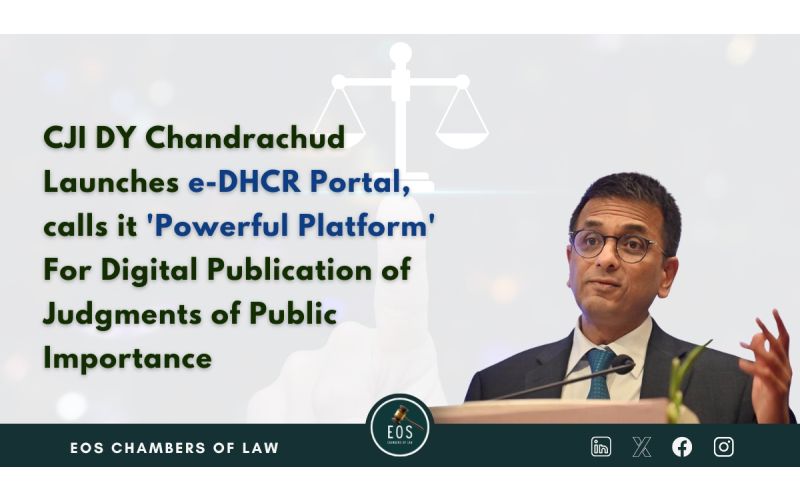
CJI DY Chandrachud Launches e-DHCR Portal, calls it 'Powerful Platform' For Digital Publication of Judgments of Public Importance
Chief Justice of India, Justice DY Chandrachud, on Monday launched the e-DHCR portal, a user friendly official platform for reporting the judgments of Delhi High Court. CJI Chandrachud said that the initiative marks a “profound shift” in ensuring the democratized ...

Navigating Real Estate Challenges: A Solicitor's Insight
Introduction: In the intricate world of real estate, consumers often find themselves entangled in a web of complexities that demand legal acumen and guidance. As a solicitor passionate about serving my clients, I feel compelled to shed light on the ...
SC On Aadhaar: Important Takeaways From The Recent Verdict
The Supreme Court ruled that Aadhaar, the ambitious public scheme that uses biometric data to generate unique identification numbers for citizens, is constitutionally valid, but with conditions. Here are the key takeaways from today’s verdict. Read More >
ED Summons Under PMLA: What to Do and What Not to Do (Complete Legal Guide)
Receiving a summons from the Enforcement Directorate (ED) under the Prevention of Money Laundering Act, 2002 (PMLA) can be intimidating. For many individuals—business owners, directors, promoters, professionals, or even family members—an ED summons creates panic, confusion, and fear of arrest. ...

Speak With Our
Get a Appointment