
SC Ruling On User Development Fee Provides Guidance For GST,
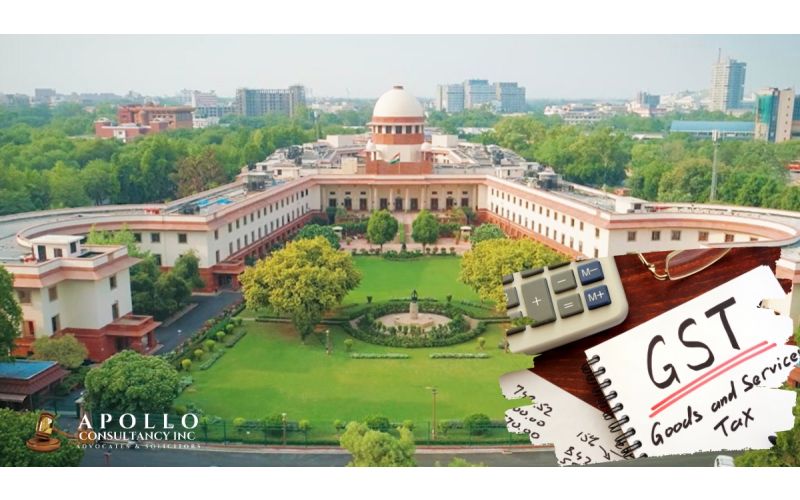
SC Ruling On User Development Fee Provides Guidance For GST, Tax On Royalty
|
The SC had held that UDF collected by the DIAL is in the nature of statutory levy and the same would not be taken as consideration against any services.
A recent judgment by the Supreme Court (SC) on the user development fee (UDF) collected by the Delhi International Airport Limited (DIAL) may have ramifications on the goods and services tax (GST) as well as the income tax on royalty etc.
Last week, the apex court had held that UDF collected by the DIAL is in the nature of statutory levy and the same would not be taken as consideration against any services.
As such, no service tax is payable on UDF, the court ruled.
As such, no service tax is payable on UDF, the court ruled.
In determining that the fee collected by the DIAL is in the nature of statutory levy, the court had laid down some principles.
Firstly, UDF is collected for the development of future establishment at the airport and no additional benefit is accrued to passengers, visitors, traders, and airlines upon levy of this fee. Thus, the UDF is in the form of ‘tax or cess’, collected for financing the cost of future projects and the same cannot be taken as consideration for services provided to the customer, visitors, passengers, vendors etc.
Secondly, the collection is not premised on the rendering of any service.
Thirdly, the amounts collected are deposited in an escrow account, not within the control of the assessee.
Fourthly, the utilization of funds is monitored and regulated by law.
Though the ruling related to the pre-GST matter, experts said the principles laid down by the SC should be applied to the GST too.
“The impact of principles laid down in the judgment would need to be analyzed under the GST legislation which specifically provides that statutory levies other than GST collected by the supplier would form part of the value of supply,” said Saurabh Agarwal, tax partner at EY.
Besides, the principles may be used for determining whether the tax be paid on royalty etc, he said.
“These may be useful in determining whether the consideration in the form of fee, royalty, etc collected by the government from business entities would be in the nature of the statutory levy or the same would be considered as a consideration against any services,” he said.
Source..
Source..
Post Categories
Featured Posts



Latest Posts








Latest Posts

SC : Divorce Can Be Granted On ‘Grounds Of Irretrievable Breakdown’
The Supreme Court on May 1 held that it can use its extraordinary powers to do “complete justice” under Article 142 of the Constitution and dissolve a marriage on the ground of ‘irretrievable breakdown’ of the union. Usually, the apex ...
ADR in Family Law: Benefits and Challenges
Alternative Dispute Resolution (ADR) has become a pivotal tool in family law, offering a way to resolve disputes without the need for contentious court battles. At Eos Chambers, we've observed the growing reliance on ADR methods such as mediation, arbitration, ...
The Role of Legal Technology in Modern Law Practices: Embracing the Digital Shift
In today’s rapidly evolving legal landscape, the integration of technology has become more than just a trend—it’s a fundamental shift that is reshaping how legal professionals operate and deliver services. As we embrace this digital transformation, the role of legal ...
Supreme Court Dismisses PIL Seeking Independent Audit Of EVM Source Codes
The Supreme Court on Friday refused to entertain a Public Interest Litigation (PIL) seeking an independent audit of source codes of Electronic Voting Machines (EVMs). The bench comprising CJI DY Chandrachud, Justice JB Pardiwala, and Justice Manoj Misra noted that ...
'No right for queer couples to jointly adopt’: SC in same-sex marriage verdict
The CJI said the law didn't preclude unmarried couples from adopting.Chief Justice of India DY Chandrachud, while announcing his verdict on a clutch of petitions demanding legal status to same-sex marriages, today struck down the Central Adoption Resource Authority's (CARA) ...
Supreme Court Clarifies Jurisdiction of State Agencies in Corruption Cases Again
The 𝐒𝐮𝐩𝐫𝐞𝐦𝐞 𝐂𝐨𝐮𝐫𝐭 of India has recently delivered a judgment of far-reaching significance in the context of corruption prosecutions involving Central Government employees. Although the matter was argued on behalf of the petitioner and the decision ultimately went against us, ...

Speak With Our
Get a Appointment