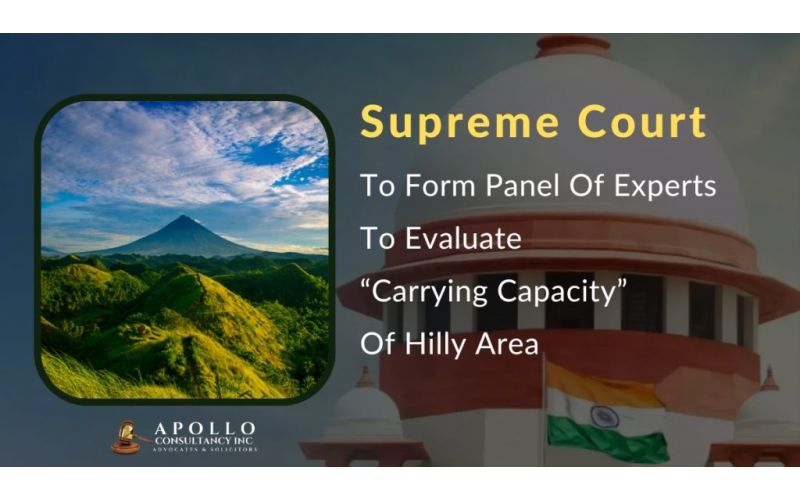
In order to determine the “carrying capacity” of overcrowded hill stations in Uttarakhand, Himachal, and other Himalayan states affected by landslides, the Supreme Court on Monday decided to form a panel of experts on environment and climate studies from government institutions.
A bench led by Hon’ble Chief Justice called it an “important issue” and further asked the Centre as well as the petitioner to suggest the work sphere of the committee. The plea has been filed by Advocate Akash Vashisht for Ashok Kumar Raghav.
“We cannot wait for all the states to respond to the Centre’s template. After the Centre receives the responses from the States, it can collate it and give the court its suggestions. Simultaneously, the expert body can assess the carrying capacity of the Himalayan States”, Court said while listing the matter on August 28, for orders.
In response to the Supreme Court’s recommendation that an expert committee be established to determine carrying capacity of hill stations, Additional Solicitor General Ms. Aishwarya Bhati informed that the Union Government had already framed a template for hill stations in all states, based on directives from the National Green Tribunal and requested their response as “land”, as a subject, fell under jurisdiction of the states.
The matter relates to a PIL seeking direction to the Union for determining “carrying capacity of all ecologically fragile areas, hill stations, high-altitude areas, highly visited areas and tourist destinations in all the 12 states/UTs in the Himalayan region in terms of tourist inflow and its impact, vehicular traffic, scarcity of ground and surface water, impact on air, water, trees, forests and biodiversity as well as climate, along with availability of waste management infrastructure and healthcare facilities”.
Case Title: Ashok Kumar Raghav Vs. Union of India and Ors.