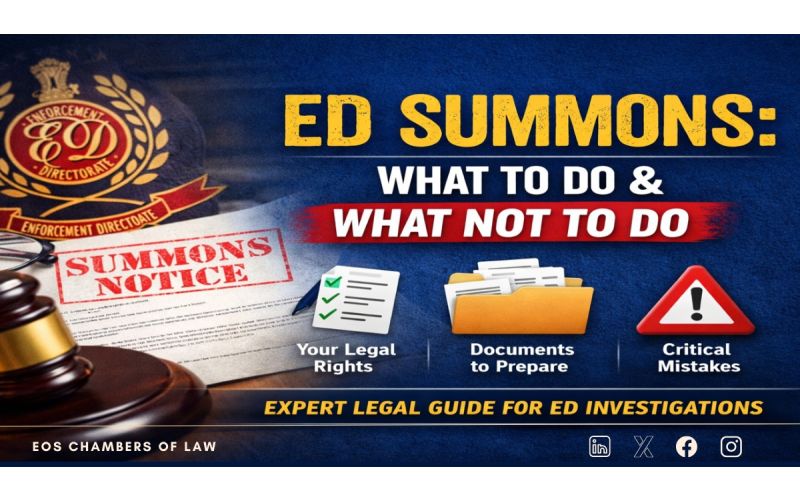
Receiving a summons from the Enforcement Directorate (ED) can be stressful and confusing for individuals, business owners, and company directors. However, understanding your legal rights and obligations can help you respond effectively and avoid serious consequences.
This guide explains what an ED summons means, how to respond, and critical mistakes you must avoid.
What is an ED Summons?
An ED summons is issued under Section 50 of the Prevention of Money Laundering Act, 2002 (PMLA).
👉 It empowers ED officers to:
- Call any person for appearance
- Record statements under oath
- Seek documents and evidence
⚠️ Important: ED proceedings are treated as judicial proceedings, meaning false statements can lead to prosecution.
Why Do You Receive an ED Summons?
You may receive a summons if:
- You are directly accused in a money laundering case
- You are a director / partner / employee of a company under investigation
- You are a witness or connected party
- Your bank transactions or financial dealings are under scrutiny
What To Do After Receiving an ED Summons
1. Carefully Read the Summons
Check:
- Date & time of appearance
- Documents required
- Case reference number
2. Consult a Lawyer Immediately
Before appearing, take legal advice from experts (like EOS Chambers of Law).
👉 This helps you:
- Understand your legal position
- Avoid self-incrimination
- Prepare proper responses
3. Prepare Documents Properly
Gather:
- Financial records
- Bank statements
- Agreements/contracts
- Income tax filings
👉 Ensure documents are:
- Complete
- Consistent
- Authentic
4. Appear on Time (VERY IMPORTANT)
Non-compliance may lead to:
- Penalties
- Coercive action
- Adverse inference
5. Give Clear & Truthful Statements
- Statements are recorded under oath
- Any false or misleading statement can be used against you
6. Stay Calm & Professional
- Do not panic
- Listen carefully before answering
- Take time to respond thoughtfully
❌ What NOT To Do (CRITICAL MISTAKES)
1. Do NOT Ignore the Summons
Ignoring ED summons can lead to:
- Legal action
- Arrest risk
- Stronger suspicion
2. Do NOT Provide False Information
Even small inconsistencies can:
- Damage credibility
- Strengthen the case against you
3. Do NOT Hide or Destroy Documents
This can result in:
- Obstruction charges
- Severe legal consequences
4. Do NOT Appear Without Legal Preparation
Walking in unprepared is risky.
👉 Every statement matters.
5. Do NOT Sign Statements Without Reading
Always:
- Read carefully
- Request corrections if needed
- Keep mental note of what you stated
Your Legal Rights During ED Proceedings
Even though ED has wide powers, you still have rights:
- Right to legal consultation (though lawyer may not be present during questioning at all times)
- Right against self-incrimination under Article 20(3) of the Constitution
- Right to fair treatment
- Right to receive copy of statements (in certain cases)
Can You Avoid Appearance?
In genuine cases, you may request:
- Adjournment (with valid reason)
- Representation through documents
👉 However, approval is at ED’s discretion.
Consequences of Non-Compliance
Failure to comply may result in:
- Penalties under PMLA
- Arrest in serious cases
- Attachment of property
- Prosecution
Practical Tips from Legal Experts
- Always maintain proper financial records
- Avoid cash-heavy unexplained transactions
- Ensure compliance with tax and FEMA laws
- Keep legal documentation updated
Conclusion
An ED summons is a serious legal notice, but not something to panic about. With the right legal approach, proper documentation, and professional guidance, you can handle the situation effectively.