
SC Issues Notice On PIL Seeking Action Against Doctors Who D

SC Issues Notice On PIL Seeking Action Against Doctors Who Do Not Prescribe Generic Medicines
|
The plea said that affordability of medicines is a vital factor that contributes to effective healthcare delivery and the realization of the ‘right to health’
The Supreme Court on Friday issued notice on a PIL seeking disciplinary actions against doctors who fail to prescribe generic medicines.
A bench comprising Chief Justice of India D.Y. Chandrachud, Justices J.B. Pardiwala and Manoj Misra sought response from the Centre, all state governments, Ethics and Medical Registration Board (erstwhile Medical Council of India) and others in the matter.
Advocate K.C. Jain, the petitioner, apprised the bench that regulations emphasizing the importance of prescribing generic medicines, which were notified back in 2002, remain largely unimplemented in practice.
He said that the Indian Medical Council (Professional Conduct, Etiquette, and Ethics) Regulations, 2002, which highlight the significance of prescribing drugs by their generic names, exist solely within legal frameworks.
The plea said that affordability of medicines is a vital factor that contributes to effective healthcare delivery and the realization of the ‘right to health’.
“Generic drugs, which have the same active ingredients as their branded counterparts but are not marketed under a specific brand name, are often significantly cheaper. The prices of generic medicines (off-patented) can be 50 per cent to 90 per cent lower than those of branded medicines,” stated the petition.
It sought directions to the National Pharmaceuticals Pricing Authority to fix the Maximum Retail Price (MRP) of Non Scheduled formulations and off-patented generic medicines.
“By prescribing generic drugs, healthcare professionals can help alleviate the financial burden on patients and facilitate their access to vital medications,” the plea said.
Post Categories
Featured Posts







Latest Posts








Latest Posts
Transfer Of Property Act | Rents Receivable Can Be Assigned By Debtor To Creditor As Actionable Claim: Supreme Court
Rents receivable by a borrower can be assigned to a lender as an "actionable claim" as per the Transfer of Property Act,1882(TPA), held the Supreme Court while deciding a dispute between the Infrastructure Leasing and Financial Services Ltd and the ...

AI, Data Protection, and Cyber crime: Navigating Through the Nexus
It was the dawn of the Digital Revolution in the latter half of 20th century that started to reshape the world. But with the advent of AI, data protection, and cybersecurity have become paramount concerns for individuals, businesses, and governments ...
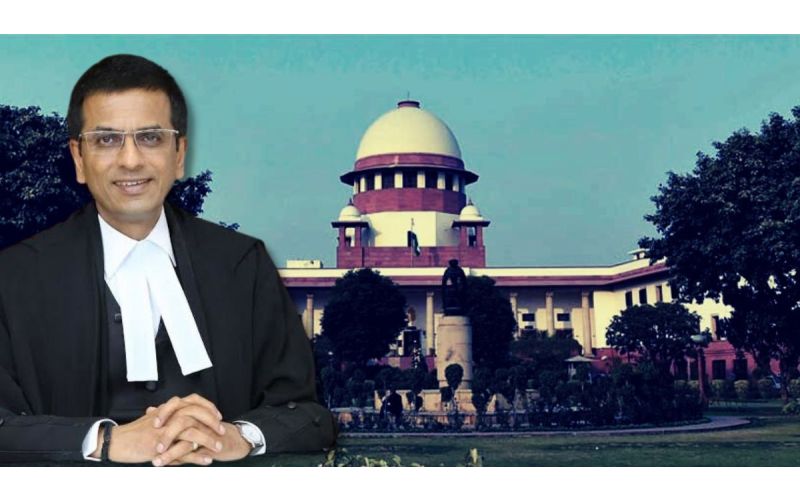
Can’t Seek Immunity From Legal Provisions Because Contract In President’s Name: SC
Defending the Centre, ASG argued that the contract in the case stands on a different footing as it is entered into in the name of the President.The Union of India cannot demand an immunity from the operation of pertinent legal ...
Grant Of Bail Can't Be Made Dependent On Surrender Of Co-Accused : Supreme Court
A Division Bench of the Supreme Court, while allowing a bail plea, held that the grant of bail to a co-accused person cannot be contingent on the surrender of another accused who is also pertinently the main accused in the ...
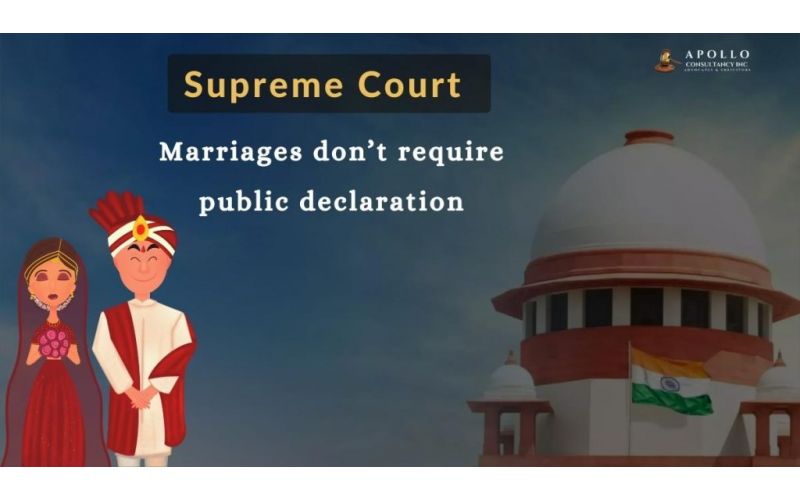
Marriages Don’t Require Public Declaration: SC
The Supreme Court of India has ruled that not all marriages require a public declaration or solemnisation Not every valid marriage requires a public declaration or solemnisation in a particular manner, the Supreme Court held on Monday, as it underlined ...
Buyer Not Complying With Timeline For Payment Can't Seek Specific Performance Of Agreement To Sell : Supreme Court
The Supreme Court in a recent decision held that when a contract stipulates a specific time frame within which the consideration needs to be paid by the 'buyer' to execute the 'agreement to sale' by the 'seller', then the buyer ...

Speak With Our
Get a Appointment