
Contract Law in the Digital Age: How E-Contracts Are Transfo
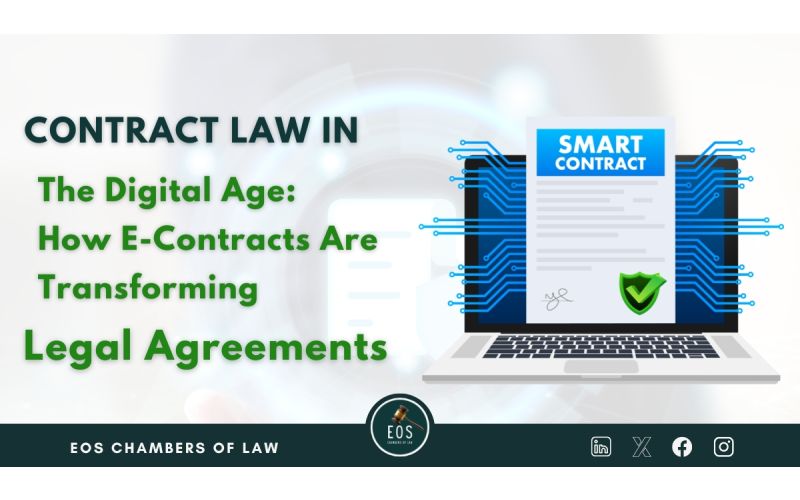
Contract Law in the Digital Age: How E-Contracts Are Transforming Legal Agreements
|
In today's fast-paced, technology-driven world, traditional paper-based contracts are swiftly being replaced by electronic contracts, or e-contracts. This shift is transforming the way legal agreements are created, executed, and enforced. Here’s an in-depth look at how e-contracts are revolutionizing contract law in the digital age.
What are E-Contracts?
E-contracts are agreements created and signed electronically, often without the need for physical presence or paper documentation. They can take various forms, such as clickwrap agreements (common in software installations), browsewrap agreements (website terms of use), and sign-on-the-dotted-line agreements facilitated by e-signature platforms.
Legal Validity of E-Contracts
**1. Global Perspective:
- In many countries, including the US (via the E-SIGN Act and UETA) and the EU (via the eIDAS Regulation), e-contracts and e-signatures are legally valid and enforceable, provided they meet certain criteria.
**2. Indian Context:
- In India, the Information Technology Act, 2000 (IT Act) provides the legal framework for e-contracts. Sections 4 and 5 of the IT Act grant legal recognition to electronic records and electronic signatures, making e-contracts legally valid.
Advantages of E-Contracts
**1. Efficiency:
- E-contracts significantly reduce the time required to draft, review, and sign agreements. They eliminate the need for physical meetings and document exchange, enabling faster deal closures.
**2. Cost-Effective:
- By reducing the reliance on paper, printing, postage, and physical storage, e-contracts lower the overall cost of managing contracts.
**3. Accessibility:
- E-contracts can be accessed and signed from anywhere in the world, providing greater convenience and flexibility for parties involved in the agreement.
**4. Security:
- E-contract platforms often incorporate robust security features, such as encryption and multi-factor authentication, ensuring the integrity and confidentiality of the agreements.
**5. Auditability:
- Digital records of e-contracts provide a clear audit trail, making it easier to track changes, review contract history, and resolve disputes.
Challenges and Considerations
**1. Digital Divide:
- The effectiveness of e-contracts depends on the accessibility and adoption of digital technologies. In regions with limited internet connectivity or low digital literacy, implementing e-contracts can be challenging.
**2. Authentication and Verification:
- Ensuring the authenticity of electronic signatures and verifying the identity of parties involved is crucial. Technologies like digital certificates and biometric authentication can enhance security.
**3. Jurisdictional Issues:
- E-contracts often involve parties from different jurisdictions, raising questions about applicable laws and dispute resolution mechanisms. Clear jurisdictional clauses and choice of law provisions are essential.
**4. Enforceability:
- While e-contracts are generally enforceable, certain types of agreements (e.g., wills, real estate transactions) may still require traditional signatures in some jurisdictions. Understanding these exceptions is important.
**5. Data Privacy:
- Handling personal data in e-contracts necessitates compliance with data protection regulations, such as GDPR in the EU or PDPB in India. Ensuring data privacy and security is paramount.
Future of E-Contracts
**1. Blockchain Integration:
- Blockchain technology offers the potential to create tamper-proof, self-executing smart contracts. These contracts can automatically enforce terms and conditions based on predefined criteria, reducing the need for intermediaries.
**2. AI and Machine Learning:
- AI-driven contract management systems can streamline the drafting, negotiation, and review process, identifying potential risks and ensuring compliance with legal standards.
**3. Widespread Adoption:
- As digital literacy and internet connectivity improve, the adoption of e-contracts is expected to grow, further integrating them into mainstream legal and business practices.
Conclusion
E-contracts are reshaping the landscape of contract law, offering numerous benefits in terms of efficiency, cost-effectiveness, and security. While challenges remain, advancements in technology and legal frameworks are paving the way for broader adoption. Businesses and legal professionals must stay abreast of these developments to leverage the full potential of e-contracts in the digital age.
Post Categories
Featured Posts








Latest Posts








Latest Posts
Motor Accident Claims | No Right To Recovery For Insurer Merely Because Vehicle Owner Didn't Verify Driver's License : Supreme Court
The Supreme Court on Monday (30th October) held that an insurance company cannot claim that it is not liable to pay compensation in a motor vehicle accident claim just because the vehicle owner did not verify the genuineness of the ...
Adolescent Privacy Rights: A Critical Issue in India’s Evolving Digital Landscape
The rapid advancement of technology has transformed the lives of adolescents in India, providing unprecedented access to information, social connectivity, and learning tools. However, this digital revolution has also created a complex challenge—safeguarding the privacy of adolescents who are increasingly ...
Remote Work and Employment Law in India: Navigating Legal Implications for Employers and Employees
Remote Work and Employment Law in India: Navigating Legal Implications for Employers and Employees The rise of remote work, accelerated by the COVID-19 pandemic, has fundamentally changed the way businesses operate and employees engage with their work. While remote work ...
Members Of Railway Protection Force Can Seek Benefit Under Employees Compensation Act Though RPF Declared As An Armed Force: Supreme Court
The Supreme Court on Monday (26.09.2023), held that an officer of the Railway Protection Force (RPF) can seek compensation under Employees Compensation Act, 1923 even though the RPF has been declared to be an armed force of the Union. “..in ...

Legal Challenges in NRI Marriages
Introduction Non-Resident Indian (NRI) marriages, while often joyous, can also bring a unique set of legal challenges. These challenges stem from cross-border legal systems, differing cultural expectations, and complex family dynamics. Understanding these issues is crucial for NRIs and their ...
No Law Gives Right To Husband To Beat & Torture His Wife: Delhi High Court Grants Divorce To Woman On Ground Of Cruelty And Desertion
Synopsis The court was hearing an appeal by a woman challenging the decision of the trial court, whereby it has dismissed her petition seeking divorce from the man on the ground of cruelty and desertion While granting divorce to a woman ...

Speak With Our
Get a Appointment