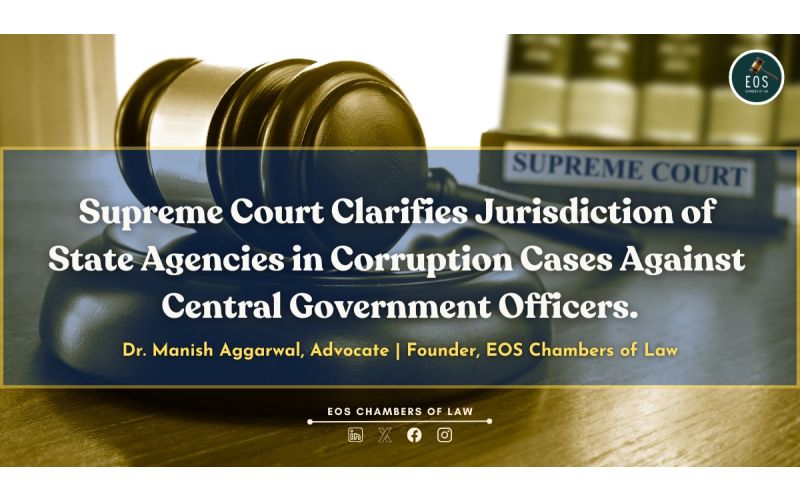
The 𝐒𝐮𝐩𝐫𝐞𝐦𝐞 𝐂𝐨𝐮𝐫𝐭 of India has recently delivered a judgment of far-reaching significance in the context of corruption prosecutions involving Central Government employees. Although the matter was argued on behalf of the petitioner and the decision ultimately went against us, the ruling settles an important question of law and contributes substantially to national jurisprudence.
This article seeks to objectively analyse the judgment, its legal reasoning, and its implications for future investigations under the 𝐏𝐫𝐞𝐯𝐞𝐧𝐭𝐢𝐨𝐧 𝐨𝐟 𝐂𝐨𝐫𝐫𝐮𝐩𝐭𝐢𝐨𝐧 𝐀𝐜𝐭, 1988.
The core issue before the Court was whether 𝐒𝐭𝐚𝐭𝐞 𝐢𝐧𝐯𝐞𝐬𝐭𝐢𝐠𝐚𝐭𝐢𝐯𝐞 𝐚𝐠𝐞𝐧𝐜𝐢𝐞𝐬, particularly the 𝐒𝐭𝐚𝐭𝐞 𝐀𝐧𝐭𝐢-𝐂𝐨𝐫𝐫𝐮𝐩𝐭𝐢𝐨𝐧 𝐁𝐮𝐫𝐞𝐚𝐮 (𝐀𝐂𝐁), possess jurisdiction to:
▪️Register FIRs
▪️Conduct investigations
▪️File charge-sheets
against 𝐂𝐞𝐧𝐭𝐫𝐚𝐥 𝐆𝐨𝐯𝐞𝐫𝐧𝐦𝐞𝐧𝐭 𝐞𝐦𝐩𝐥𝐨𝐲𝐞𝐞𝐬 for offences under the Prevention of Corruption Act, without prior consent or approval of the 𝐂𝐞𝐧𝐭𝐫𝐚𝐥 𝐁𝐮𝐫𝐞𝐚𝐮 𝐨𝐟 𝐈𝐧𝐯𝐞𝐬𝐭𝐢𝐠𝐚𝐭𝐢𝐨𝐧 (𝐂𝐁𝐈).
𝐓𝐡𝐞 𝐑𝐚𝐣𝐚𝐬𝐭𝐡𝐚𝐧 𝐇𝐢𝐠𝐡 𝐂𝐨𝐮𝐫𝐭 had earlier refused to quash the criminal proceedings initiated by the State ACB against a Central Government employee. The matter was carried in appeal to the 𝐒𝐮𝐩𝐫𝐞𝐦𝐞 𝐂𝐨𝐮𝐫𝐭.
𝐊𝐞𝐲 𝐋𝐞𝐠𝐚𝐥 𝐐𝐮𝐞𝐬𝐭𝐢𝐨𝐧𝐬 𝐂𝐨𝐧𝐬𝐢𝐝𝐞𝐫𝐞𝐝
𝘛𝘩𝘦 𝘚𝘶𝘱𝘳𝘦𝘮𝘦 𝘊𝘰𝘶𝘳𝘵 𝘦𝘹𝘢𝘮𝘪𝘯𝘦𝘥 𝘵𝘸𝘰 𝘱𝘳𝘪𝘯𝘤𝘪𝘱𝘢𝘭 𝘲𝘶𝘦𝘴𝘵𝘪𝘰𝘯𝘴:
1. Whether the 𝐒𝐭𝐚𝐭𝐞 𝐀𝐂𝐁 𝐡𝐚𝐬 𝐣𝐮𝐫𝐢𝐬𝐝𝐢𝐜𝐭𝐢𝐨𝐧 to register and investigate corruption offences against Central Government employees within the territorial limits of the State.
2. Whether a 𝐜𝐡𝐚𝐫𝐠𝐞-𝐬𝐡𝐞𝐞𝐭 𝐟𝐢𝐥𝐞𝐝 𝐛𝐲 𝐚 𝐒𝐭𝐚𝐭𝐞 𝐚𝐠𝐞𝐧𝐜𝐲, without prior approval or consent of the CBI, can be considered valid in law.
𝐒𝐮𝐩𝐫𝐞𝐦𝐞 𝐂𝐨𝐮𝐫𝐭’𝐬 𝐅𝐢𝐧𝐝𝐢𝐧𝐠𝐬
The Supreme Court answered both questions 𝐚𝐠𝐚𝐢𝐧𝐬𝐭 𝐭𝐡𝐞 𝐩𝐞𝐭𝐢𝐭𝐢𝐨𝐧𝐞𝐫 and upheld the jurisdiction of State agencies. The Court held that:
▪️𝐒𝐭𝐚𝐭𝐞 𝐩𝐨𝐥𝐢𝐜𝐞 𝐚𝐧𝐝 𝐒𝐭𝐚𝐭𝐞 𝐀𝐂𝐁𝐬 𝐚𝐫𝐞 𝐥𝐞𝐠𝐚𝐥𝐥𝐲 competent to investigate offences under the Prevention of Corruption Act, even when the accused is a Central Government employee.
▪️𝐏𝐫𝐢𝐨𝐫 𝐩𝐞𝐫𝐦𝐢𝐬𝐬𝐢𝐨𝐧 𝐨𝐫 𝐬𝐚𝐧𝐜𝐭𝐢𝐨𝐧 𝐨𝐟 𝐭𝐡𝐞 𝐂𝐁𝐈 𝐢𝐬 𝐧𝐨𝐭 𝐦𝐚𝐧𝐝𝐚𝐭𝐨𝐫𝐲 for registering such cases or filing charge-sheets.
▪️A charge-sheet filed by a State agency 𝐜𝐚𝐧𝐧𝐨𝐭 𝐛𝐞 𝐢𝐧𝐯𝐚𝐥𝐢𝐝𝐚𝐭𝐞𝐝 𝐬𝐨𝐥𝐞𝐥𝐲 𝐨𝐧 𝐭𝐡𝐞 𝐠𝐫𝐨𝐮𝐧𝐝 that it lacks CBI approval.
𝐈𝐧𝐭𝐞𝐫𝐩𝐫𝐞𝐭𝐚𝐭𝐢𝐨𝐧 𝐨𝐟 𝐭𝐡𝐞 𝐃𝐒𝐏𝐄 𝐀𝐜𝐭
A significant part of the judgment deals with the interpretation of the 𝐃𝐞𝐥𝐡𝐢 𝐒𝐩𝐞𝐜𝐢𝐚𝐥 𝐏𝐨𝐥𝐢𝐜𝐞 𝐄𝐬𝐭𝐚𝐛𝐥𝐢𝐬𝐡𝐦𝐞𝐧𝐭 𝐀𝐜𝐭 (𝐃𝐒𝐏𝐄 𝐀𝐜𝐭), which governs the functioning of the CBI.
𝑻𝒉𝒆 𝑪𝒐𝒖𝒓𝒕 𝒓𝒆𝒂𝒇𝒇𝒊𝒓𝒎𝒆𝒅 𝒕𝒉𝒂𝒕:
▪️The DSPE Act is enabling and permissive, not exclusive.
▪️It does not divest State police authorities of their inherent jurisdiction to investigate offences under other competent laws.
▪️The existence of the CBI does not automatically oust the powers of State investigative agencies.
This reasoning was supported by earlier precedent, including A.C. Sharma v. Delhi Administration, which continues to hold authoritative value.
Consistency with Earlier Judicial Pronouncements
The Supreme Court also approved and relied upon decisions of multiple High Courts, including:
- Madhya Pradesh High Court
- Andhra Pradesh High Court
- Kerala High Court
All of these judgments consistently held that:
- Corruption offences committed by Central Government employees posted in a State may be investigated either by State police/ACB or by the CBI.
- Investigations conducted by State agencies cannot be termed illegal merely due to absence of CBI involvement.
Why This Judgment Is of National Importance
While the outcome of the case was adverse to the petitioner, the judgment is significant because it:
- Removes long-standing ambiguity regarding investigative jurisdiction
- Strengthens federal investigative powers
- Prevents procedural challenges based solely on agency selection
- Promotes accountability of public servants irrespective of service cadre
The ruling ensures that corruption investigations are not stalled on technical grounds and reinforces the principle that jurisdiction flows from law, not designation.
Professional Reflection
As legal practitioners, it is important to recognise that not every argued case results in a favourable outcome. However, cases that clarify the law and settle important questions often serve a larger constitutional and institutional purpose.
This judgment contributes meaningfully to legal certainty and will guide investigative agencies, trial courts, and practitioners across the country.
Conclusion
The Supreme Court’s ruling conclusively establishes that State agencies are competent to investigate corruption offences against Central Government employees, and that the CBI’s role, though significant, is not exclusive.
Even though the decision went against the petitioner, it stands as a landmark clarification of law with nationwide implications for anti-corruption enforcement in India.
⚖️ The strength of the legal system lies not only in victories, but in clarity, consistency, and constitutional balance.