🧠 Introduction: A New Era for Justice
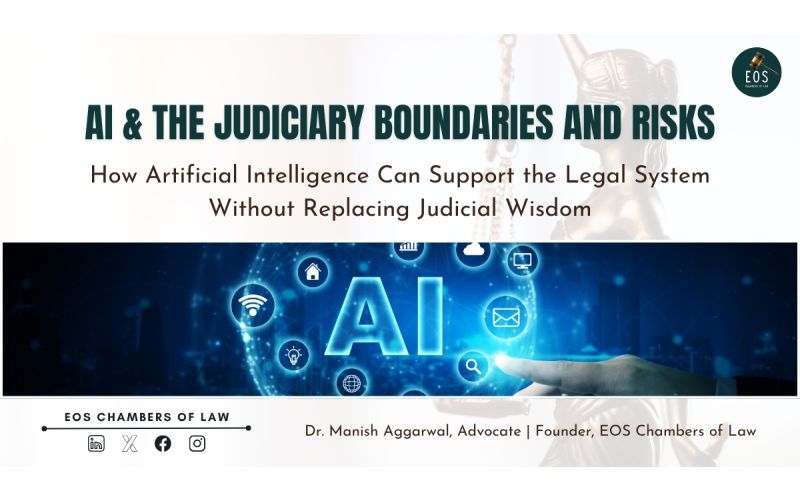
Artificial Intelligence (AI) has rapidly entered almost every professional domain — and the legal world is no exception. From predictive analytics to legal research automation, AI is revolutionizing how lawyers, judges, and courts function.
Yet, as technology advances, an important question emerges:
How far should AI be allowed to influence judicial decision-making?
The debate took center stage recently when the Kerala High Court issued a guideline cautioning against the use of AI-generated content in judicial orders, emphasizing that AI must assist, not decide.
This marks a pivotal moment in defining the boundaries between machine intelligence and human judgment in India’s justice system.
⚖️ The Promise of AI in Law
AI’s potential in law is immense — not as a substitute for judges or advocates, but as a support system to enhance efficiency, reduce backlog, and improve accuracy.
Here’s where AI can make a legitimate, positive impact:
-
Legal Research & Precedent Analysis
-
AI-powered tools like ChatGPT, CaseMine, and SCC Online AI can scan thousands of judgments within seconds.
-
They assist advocates in finding relevant precedents faster, improving the quality of arguments.
-
-
Predictive Case Analytics
-
AI can analyze historical judgments to predict the likelihood of outcomes, helping lawyers prepare realistic case strategies.
-
-
Document Review & Drafting
-
Routine drafting — from notices to contracts — can be streamlined using AI, allowing lawyers to focus on complex reasoning.
-
-
Court Administration
-
Scheduling, filing, and transcription tasks can be automated, reducing clerical delays and enabling judges to devote more time to core judicial work.
-
In all these areas, AI empowers legal professionals, but does not replace their interpretive or ethical judgment.
⚠️ The Risks: When Technology Crosses the Line
Despite its benefits, the unregulated use of AI in judicial contexts carries significant risks:
-
Erosion of Judicial Reasoning
AI lacks empathy, morality, and contextual understanding. Law is not just logic — it’s justice tempered with humanity. Machines can assist with data but cannot replicate discretion. -
Bias in Algorithms
AI systems learn from existing data — and if that data carries social, gender, or racial biases, the system may unknowingly replicate them. -
Accountability Concerns
Who is responsible if an AI-assisted legal opinion or recommendation goes wrong — the developer, the user, or the court? The chain of accountability remains unclear. -
Data Privacy & Confidentiality
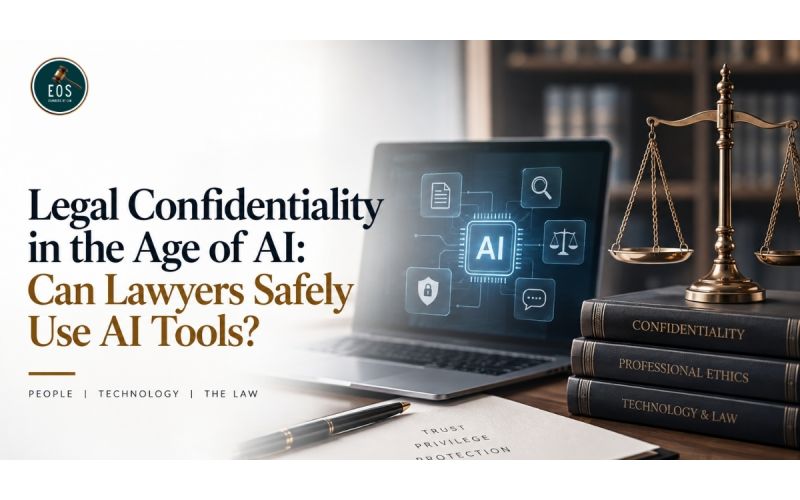
Legal data is often sensitive. Feeding such information into AI systems, especially cloud-based ones, risks breaches of client confidentiality.
The Kerala High Court’s caution is, therefore, timely — a reminder that AI should be a tool, not a torchbearer.
🏛️ Judicial Wisdom Must Lead, Technology Must Follow
Judicial decision-making involves moral reasoning, interpretation of intent, and empathy — elements no machine can replicate.
As Justice D.Y. Chandrachud has often emphasized, “Technology should serve justice, not replace it.”
Therefore, while courts may adopt AI for administrative ease, the act of adjudication must remain human-centric. A machine can suggest, but only a judge can decide.
📜 What India Needs: A Balanced AI Framework
To harness AI responsibly, India must frame clear Judicial AI Ethics Guidelines, focusing on:
-
Transparency – Courts must disclose when AI tools are used in judgments or research.
-
Validation – Only approved, certified AI systems should be used in legal processes.
-
Accountability – Ensure human oversight in all AI-assisted outcomes.
-
Data Protection – Secure handling of legal data and client information.
-
Training & Awareness – Judges, lawyers, and clerks should undergo AI literacy training to use technology safely and ethically.
🌐 The Future of AI in Law
AI will undoubtedly play a central role in the modernization of India’s justice system — but not as a decision-maker, rather as a decision-support system.
Just as digital filing and e-courts transformed accessibility, AI will transform efficiency — if managed wisely.
The real challenge lies not in embracing AI, but in ensuring it serves justice without overshadowing it.
💬 Conclusion: Technology with Temperance
The Indian judiciary must walk a fine line — welcoming innovation while guarding against overreach.
The role of the advocate and the judge remains sacred, built on ethics, empathy, and intellect — qualities no algorithm can emulate.
In the courtroom of justice, AI can assist the mind, but it must never replace the conscience.
#AIinLaw #IndianJudiciary #LegalTechnology #SupremeCourtOfIndia #KeralaHighCourt #ArtificialIntelligence #RuleOfLaw #LegalEthics #Justice #DrManishAggarwal #EOSChambers