
Get Online Pass To Enter Supreme Court Premises
Get Online Pass To Enter Supreme Court Premises
|
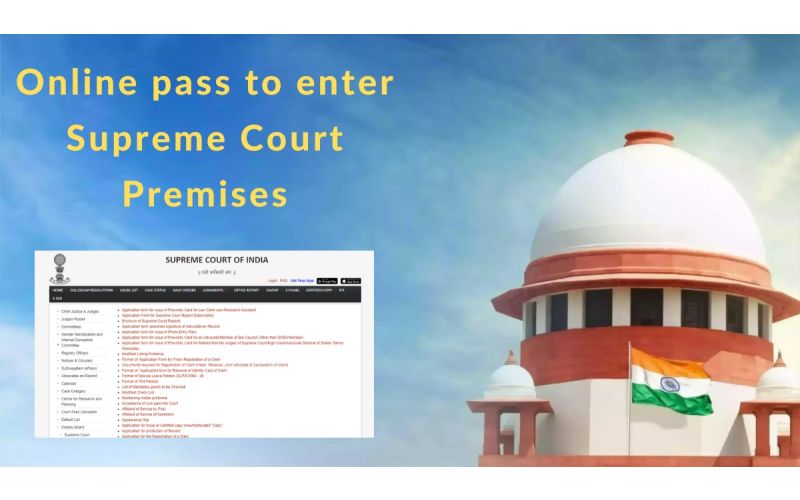
The Supreme Court on Thursday launched ‘SuSwagatam’, a new initiative to generate entry passes online to help those who need to visit the court premises for various purposes.
Chief Justice of India (CJI) D Y Chandrachud on Thursday announced the launch of ‘SuSwagatam’, the Supreme Court’s new initiative for generating entry passes online, to help those who need to visit the court premises for official or case-related purposes.
The CJI, who is presiding over a five-judge bench that has been hearing petitions challenging the changes made to Article 370 of the Constitution, made the announcement before the bench started proceedings for the day.
“All passes are generated online. So you will not have to stand in a queue in the mornings,” thereby eliminating the need for physical entry passes, he said. “This is a facility being made available from this morning,” CJI Chandrachud added.
Solicitor General Tushar Mehta said this was a major concern given that every day there is a long line before the counter in the Supreme Court premises issuing physical entry passes.
Agreeing, the CJI said, “Now, one can apply for a pass the previous evening or whenever you want by logging in for that particular day… Somebody who wants to meet somebody in the Registry will also get a pass generated. And the moment the person comes to the security counter, the entire details of the pass are reflected for the CISF personnel who are guarding the establishment.”
“We have called it SuSwagatam… Su stands for Supreme Court,” the CJI pointed out.
CJI Chandrachud then read out a statement on the new scheme. SuSwagatam is a web-based and mobile-friendly application that allows users to register themselves online and request e-passes for various purposes such as attending court hearings, meeting advocates or visiting officers or departments or the press lounge, he said.
“Users can choose from different validity periods such as daily, weekly, monthly or quarterly depending on their needs and police clearance certificates. The portal also provides role-based secure login for different types of users such as advocates, litigants, law clerks, contractual staff, third-party agencies and visitors,” CJI Chandrachud added.
Users can upload their proof of identity and capture their live photos during the registration process. They can also receive broadcast messages for important announcements or special arrangements. The ‘ePasses’ are delivered to users through email and the SuSwagatam portal, the CJI said. Users can scan the QR code at the entry and exit gates of the court premises. The portal also generates statistics on the number of ‘ePasses’ issued and used, he added.
“The SuSwagatam portal was used as a pilot project since July 25, 2023, and has received positive feedback from the users. As of August 9, 2023, more than 10,000 ePasses have been issued through the portal as a pilot,” CJI Chandrachud said, adding that the Supreme Court of India hoped that the portal would enhance the convenience and efficiency of court operations and services.
Post Categories
Featured Posts





Latest Posts








Latest Posts
Empowering NRIs: Facilitating Political Participation Through Voting Rights!
Introduction: In the digital age of globalization, the world is more interconnected than ever before. Non-Resident Indians (NRIs) are an integral part of this global community, contributing to economies, cultures, and societies around the world. However, despite their significant impact, ...
Understanding the Legal Rights of NRIs in Indian Property Matters
Introduction: For Non-Resident Indians (NRIs), owning property in India is not just a financial investment but also a connection to their roots and heritage. However, navigating the legal landscape of property ownership in India can be complex, especially for those ...
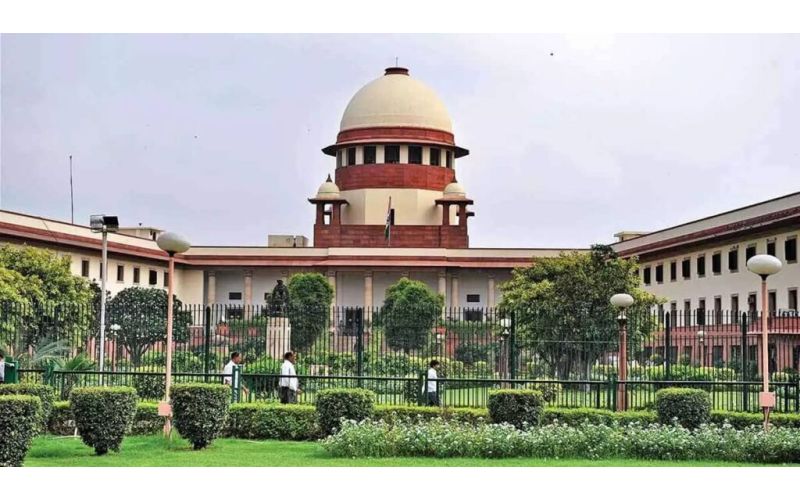
Children Born Out Of Irregular Marriage Legitimate Muslim Law – Supreme Court
The Rajya Sabha has passed the JThe Supreme Court has noted that children born out of irregular marriages, including one between a Muslim man and a Hindu woman, are legitimate and therefore eligible to inherit intestate property as per applicable ...
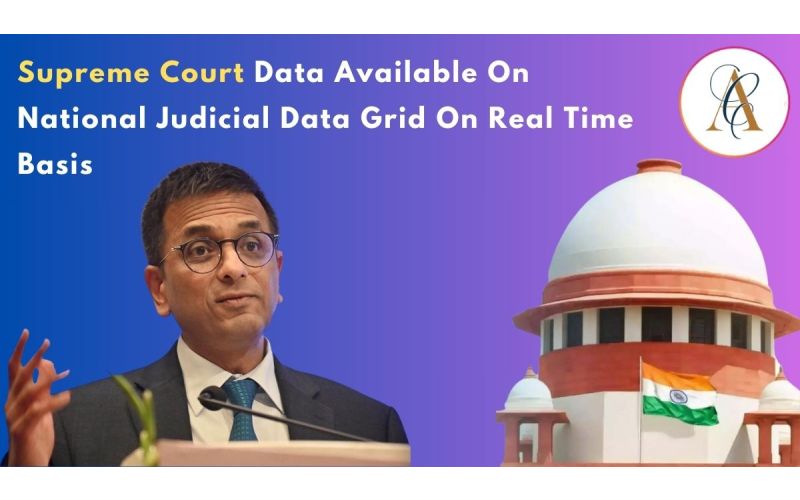
In A First, Supreme Court Data Available On National Judicial Data Grid On Real Time Basis; Boost For Transparency, Says CJI DY Chandrachud
Chief Justice of India DY Chandrachud announced today that the Supreme Court is officially 'onboard' with the National Judicial Data Grid (NJDG) now. The CJI described the onboarding of the Supreme Court data on NJDG portal under the court's 'open ...

Motor Accident Claims | No Right To Recovery For Insurer Merely Because Vehicle Owner Didn't Verify Driver's License : Supreme Court
The Supreme Court on Monday (30th October) held that an insurance company cannot claim that it is not liable to pay compensation in a motor vehicle accident claim just because the vehicle owner did not verify the genuineness of the ...

ED Summons Under PMLA: What to Do and What Not to Do (Complete Legal Guide)
Receiving a summons from the Enforcement Directorate (ED) under the Prevention of Money Laundering Act, 2002 (PMLA) can be intimidating. For many individuals—business owners, directors, promoters, professionals, or even family members—an ED summons creates panic, confusion, and fear of arrest. ...

Speak With Our
Get a Appointment