
Supreme Court Dismisses PIL Seeking Independent Audit Of EVM
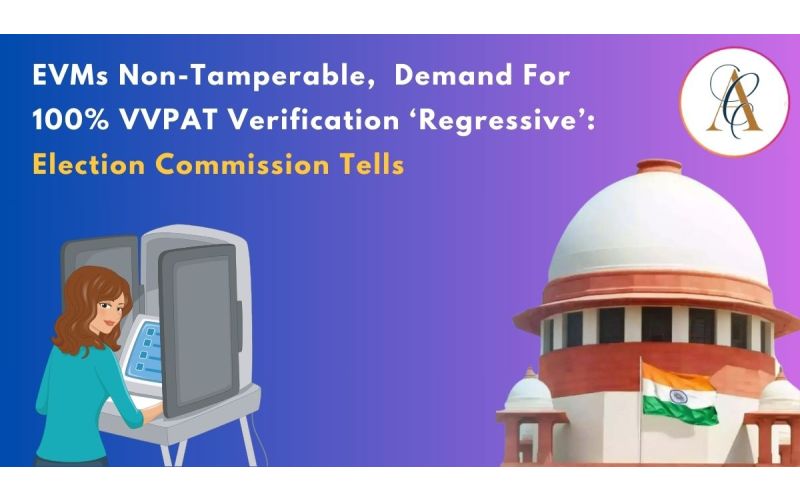
Supreme Court Dismisses PIL Seeking Independent Audit Of EVM Source Codes
|
The Supreme Court on Friday refused to entertain a Public Interest Litigation (PIL) seeking an independent audit of source codes of Electronic Voting Machines (EVMs). The bench comprising CJI DY Chandrachud, Justice JB Pardiwala, and Justice Manoj Misra noted that the matter concerned sensitive policy issues and thus, the court was not inclined to interfere with the same.
At the outset, the petitioner Sunil Ahya, appearing as party-in- person, asserted before the court that the 'source code' was like the brain of the EVMs and thus was required to be audited. He stated that there existed no formal audit report of the source code in any public domain and even when he filed an RTI application seeking for the same, the Election Commission of India (ECI) could not provide him with the same. In fact, he stated that he made three representations to the ECI but to no avail.
Referring to such auditing as necessary for the "survival of democracy", Ahya urged the bench to consider his petition.However, the bench expressed its disinclination towards entertaining the PIL stating that there already existed requisite security audits for protection in such cases. The CJI said–
"Every time we put out even a new application in the Supreme Court, we have to go through a security audit...Nothing can happen. Rest assured, there are standard guidelines..."
However, the petitioner questioned–
"What standard guidelines? They're not in public domain."
At this juncture, the CJI underlined that such things could not be provided in the public domain as they could be misused by unscrupulous elements. He said–
"If I start putting out source code of e-filing in public, who knows who'll be able to hack it."
While the petitioner reiterated his submission and said, "we are voting in an EVM where the brain of the EVM system is not being audited", the court ultimately refused to entertain the PIL. The court noted that the matter bore on sensitive issues and on such a policy issues, the court was not inclined to issue a direction which has been sought. The bench added–
Petitioner places no actionable material before this court to show that ECI has acted in breach of its constitutional mandate...No material has been placed to show that ECI is not fulfilling its mandate.
Post Categories
Featured Posts


Latest Posts








Latest Posts
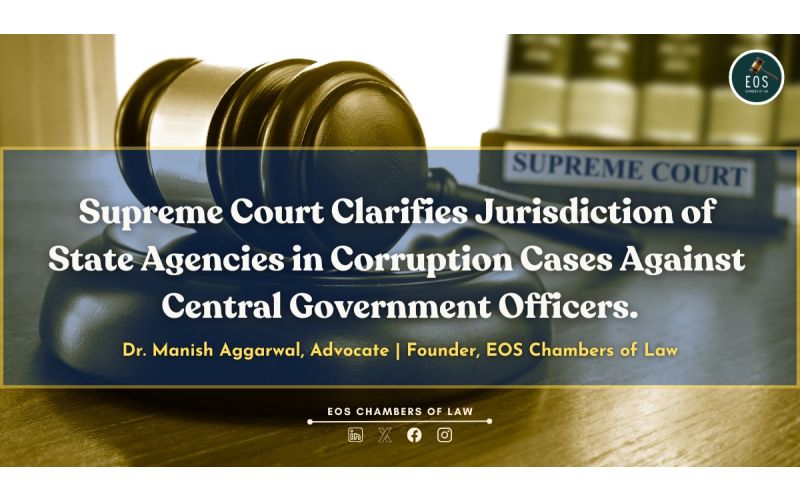
Supreme Court Clarifies Jurisdiction of State Agencies in Corruption Cases Again
The 𝐒𝐮𝐩𝐫𝐞𝐦𝐞 𝐂𝐨𝐮𝐫𝐭 of India has recently delivered a judgment of far-reaching significance in the context of corruption prosecutions involving Central Government employees. Although the matter was argued on behalf of the petitioner and the decision ultimately went against us, ...
Contract Law in the Digital Age: How E-Contracts Are Transforming Legal Agreements
In today's fast-paced, technology-driven world, traditional paper-based contracts are swiftly being replaced by electronic contracts, or e-contracts. This shift is transforming the way legal agreements are created, executed, and enforced. Here’s an in-depth look at how e-contracts are revolutionizing contract ...
Dowry Death Case | Supreme Court Surprised At HC Using Same Dying Declaration To Convict Husband While Disbelieving It For Father-in-Law
The Supreme Court, while acquitting a convict in a dowry death case, emphasized the critical importance of ensuring that a dying declaration is trustworthy and reliable, and inspires confidence when it is considered the sole basis for a criminal conviction. ...
SC refuses to entertain plea for survey of Krishna Janmabhoomi-Shahi Idgah premises
The Supreme Court Friday refused to entertain a plea by 'Shri Krishna Janambhoomi Mukti Nirman Trust' seeking a survey of the Janmabhoomi-Shahi Idgah mosque premises in Mathura to determine whether it was built on a pre-existing Hindu temple. The apex ...
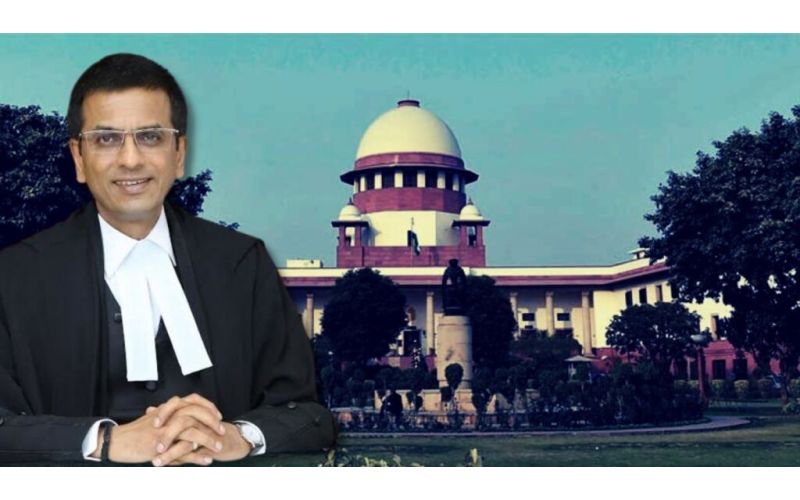
CJI Chandrachud Bats For Mediation As Dispute Resolution Mechanism For Individuals, Govt
NEW DELHI: Chief Justice of India DY Chandrachud batted on Friday for adopting and encouraging mediation, including online mediation, as a mode of dispute resolution other than litigation, saying it would reduce the courts’ caseload and has the potential to ...
S.106 Transfer Of Property Act | Onus On Tenant To Prove That Premises Was Leased For Manufacturing Purpose: Supreme Court
The Supreme Court Bench comprising Justice Aniruddha Bose and Justice Vikram Nath, has held that in order to attract the application of Section 106 of the Transfer of Property Act, 1882, which requires 6 months’ notice for termination of lease, ...

Speak With Our
Get a Appointment