
Navigating Cyber Crime Laws in India: A Legal Perspective
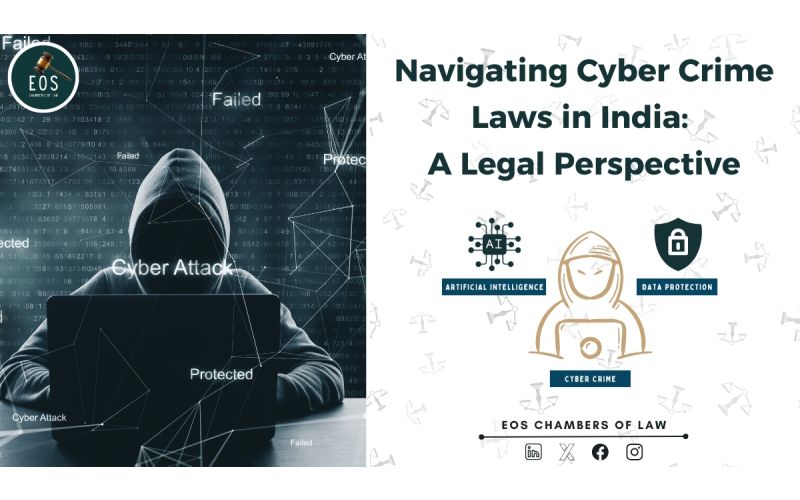
Navigating Cyber Crime Laws in India: A Legal Perspective
|
The rapid proliferation of digital technologies has transformed India’s social, economic, and professional landscape. While digitalization brings efficiency and innovation, it also exposes individuals and businesses to cybercrime risks. As a lawyer in India, it is crucial to understand the evolving challenges posed by cybercrime and the legal framework governing this domain.
What is Cybercrime?
Cybercrime refers to illegal activities carried out through digital devices, often with the intent to steal sensitive information, disrupt services, defraud individuals, or exploit digital systems. In India, common examples include online fraud, data breaches, identity theft, cyberstalking, hacking, phishing attacks, and ransomware.
Key Cybercrime Laws in India
India’s response to cybercrime is primarily driven by the Information Technology Act, 2000 (IT Act), amended in 2008. This legislation defines various cyber offenses, assigns penalties, and equips investigative authorities with tools to track and prosecute offenders. Here are some critical sections:
- Section 66: Addresses hacking and unauthorized access to computers, carrying penalties of imprisonment and fines.
- Section 67: Criminalizes the transmission and publication of obscene material online.
- Section 72: Enforces the confidentiality and privacy of information, penalizing unauthorized data disclosures.
- Section 66F: Covers cyber terrorism, carrying severe punishments, including life imprisonment.
The Indian Penal Code (IPC) complements these provisions, applying to cyber offenses like defamation, fraud, and extortion when perpetrated in digital spaces. The integration of cybercrime into broader criminal law ensures the applicability of traditional criminal justice mechanisms to digital offenses.
Key Challenges in Combating Cybercrime
Despite having a strong legal framework, India faces significant hurdles in effectively combating cybercrime:
- Rapid Technological Advancements: The pace of technological change makes it challenging for laws to stay current. Emerging threats like AI-driven fraud, cryptocurrency crimes, and deepfake technology demand innovative regulatory responses.
- Cross-Border Jurisdiction: Cybercrime often transcends national borders, creating enforcement complexities due to differing international laws and regulations.
- Limited Resources and Expertise: Many law enforcement agencies lack the advanced training and technical resources needed for digital forensics and cyber investigations.
- Balancing Privacy and Security: Cyber investigations often necessitate digital tracking and surveillance, raising concerns about data privacy and civil liberties.
Reporting and Enforcement Mechanisms
India has taken proactive steps to combat cybercrime through specialized Cyber Crime Cells across states and dedicated initiatives such as the Indian Cyber Crime Coordination Centre (I4C). Victims can report incidents via India’s Cyber Crime Reporting Portal. Law enforcement agencies collaborate with private tech companies, cybersecurity experts, and international bodies to address cyber threats holistically.
Recent Developments and Future Prospects
The upcoming Personal Data Protection Bill promises to strengthen citizens’ data privacy rights by introducing stricter rules for data handling, processing, and storage. This legislation aims to strike a balance between national security, data governance, and individual privacy.
Conclusion
The fight against cybercrime in India is multifaceted and constantly evolving. Lawyers, businesses, and individuals must remain vigilant, adapting to new threats while advocating for enhanced regulatory measures. As legal professionals, staying informed and contributing to policy discourse can play a vital role in shaping a safer digital future for India.
Post Categories
Featured Posts








Latest Posts








Latest Posts

Buyer Not Complying With Timeline For Payment Can't Seek Specific Performance Of Agreement To Sell : Supreme Court
The Supreme Court in a recent decision held that when a contract stipulates a specific time frame within which the consideration needs to be paid by the 'buyer' to execute the 'agreement to sale' by the 'seller', then the buyer ...
Section 313 CrPC | 'Right To Remain Silent Not Be Used Against Accused' : Supreme Court Summarises 12 Principles
Recently, the Supreme Court, in a noteworthy judgment, while acquitting a woman accused of killing her own child and was convicted for murder and sentenced to life imprisonment, also decided the question of what may be required of the convict ...
Inheritance and Succession Laws: What Every NRI Should Know
For Non-Resident Indians (NRIs), navigating inheritance and succession laws in India can be complex. Whether dealing with ancestral property, inheriting assets, or managing family estates, NRIs must understand the legal framework to safeguard their rights and avoid disputes. Here are ...

Navigating the Complexities of Corporate & Commercial Laws: Key Considerations for Businesses
In today's dynamic business landscape, understanding and complying with corporate and commercial laws are paramount for organizations aiming to thrive and expand. From formation and governance to contractual relationships and regulatory compliance, adherence to legal frameworks is essential for maintaining ...
An In-Depth Look at Environmental and Sustainability Law
In today's rapidly changing world, environmental and sustainability law has become a cornerstone of global legal practices. With increasing awareness of climate change, resource depletion, and environmental degradation, these laws are essential for promoting sustainable development and protecting our planet ...

Won’t interfere with firecracker ban in Delhi: SC
Ahead of the festive season, the Supreme Court on Wednesday said that it would not interfere with a decision of a state government if it decides to impose a complete ban on firecrackers, including green crackers, to check pollution level ...

Speak With Our
Get a Appointment