
Repatriation of Funds and Investments: Legal Guidelines for
Repatriation of Funds and Investments: Legal Guidelines for NRIs
|
For Non-Resident Indians (NRIs), repatriating funds and investments back to their country of residence is a crucial aspect of financial management. However, navigating the legal landscape can be complex. Here are essential guidelines NRIs should follow to ensure smooth and compliant repatriation:
- Understand FEMA Regulations: The Foreign Exchange Management Act (FEMA) governs the repatriation of funds in India. Familiarize yourself with FEMA provisions to ensure compliance when transferring money abroad.
- Eligible Sources of Funds: NRIs can repatriate funds from various sources, including:
- Sale of property in India
- Income from investments, such as rent or dividends
- Funds held in Non-Resident External (NRE) accounts Ensure that the source of funds complies with FEMA regulations.
- Documentation is Essential: Maintain accurate documentation for all transactions, including bank statements, sale agreements, and tax returns. Proper records will facilitate smooth repatriation and help avoid legal complications.
- Limitations on Repatriation: While NRIs can repatriate up to $1 million per financial year for personal and capital account transactions, be aware of the limitations imposed on certain types of investments. Consulting with a financial advisor can clarify these limits.
- Tax Implications: Understand the tax consequences of repatriating funds. Capital gains tax may apply when selling assets in India, impacting the amount you can transfer. Engaging a tax consultant can help you navigate these complexities.
- Seek Professional Assistance: Consider working with legal and financial professionals who specialize in NRI issues. Their expertise can help ensure compliance with Indian laws and facilitate hassle-free repatriation.
By adhering to these guidelines, NRIs can effectively manage the repatriation of their funds and investments, ensuring their financial interests are protected while complying with legal requirements.
Post Categories
Featured Posts








Latest Posts








Latest Posts
Punjab & Haryana High Court Issues Guidelines To Check Unnecessary Arrests; Non-Compliance Will Lead To Departmental Enquiry, Contempt Action
The Punjab & Haryana High Court has issued guidelines in compliance with the Supreme Court directions in Md. Asfak Alam v. State of Jharkhand & Anr. to ensure that police officers do not make unnecessary arrests and that Magistrates do ...
Supreme Court Dismisses PIL Seeking Independent Audit Of EVM Source Codes
The Supreme Court on Friday refused to entertain a Public Interest Litigation (PIL) seeking an independent audit of source codes of Electronic Voting Machines (EVMs). The bench comprising CJI DY Chandrachud, Justice JB Pardiwala, and Justice Manoj Misra noted that ...

NRI Divorce and Child Custody Rights in India: What You Must Know
When NRIs (Non-Resident Indians) go through a divorce involving children, legal rights around custody, visitation, and jurisdiction often become complex. Key Points: Jurisdiction Matters: If the marriage was registered in India or the couple last lived here, Indian courts can ...

Understanding Section 11: Why Minors Cannot Contract | Know the Law
📘 Can a Minor Enter Into a Contract? ❌ Absolutely Not.As per Section 11 of the Indian Contract Act, 1872, a person must be of the age of majority (i.e., 18 years or 21 in certain guardianship cases) to enter ...
Motor Accident Claims | No Right To Recovery For Insurer Merely Because Vehicle Owner Didn't Verify Driver's License : Supreme Court
The Supreme Court on Monday (30th October) held that an insurance company cannot claim that it is not liable to pay compensation in a motor vehicle accident claim just because the vehicle owner did not verify the genuineness of the ...
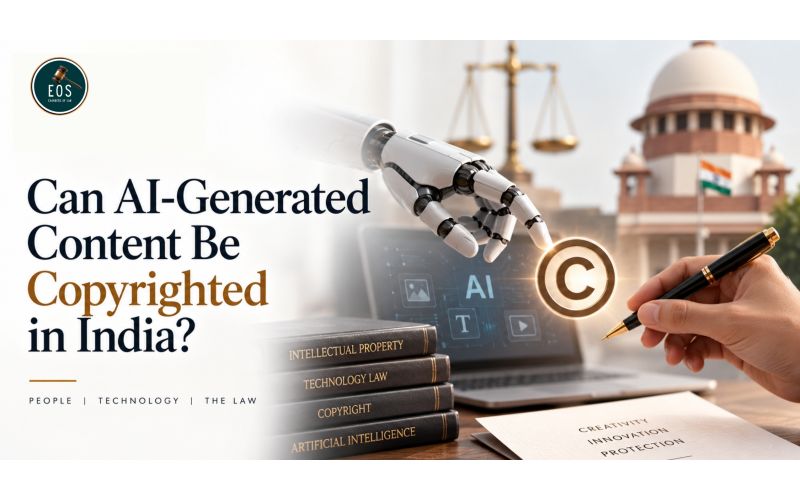
Can AI-Generated Content Be Copyrighted in India?
Understanding Copyright Ownership, AI-Assisted Creation, Originality and the Emerging Legal Position Artificial Intelligence has fundamentally changed the way content is created. Today, a person can use an AI tool to generate a blog article, photograph, illustration, advertisement, music composition, video, ...

Speak With Our
Get a Appointment