
Inheritance and Succession Laws for NRIs
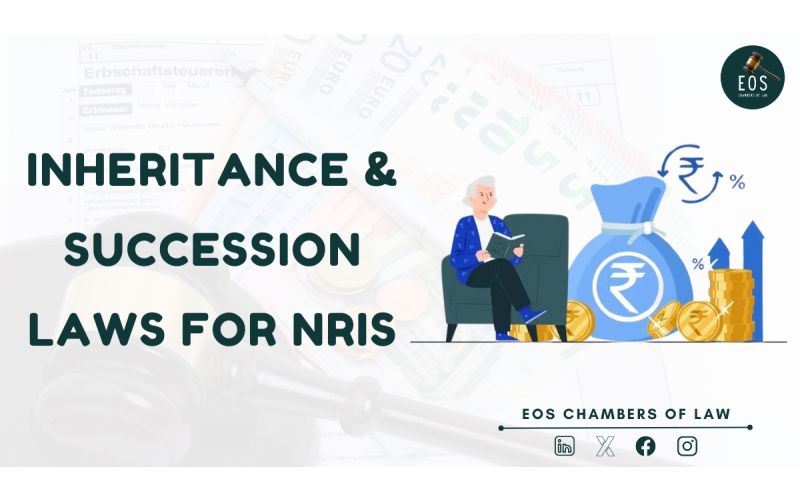
Inheritance and Succession Laws for NRIs
|
📢 Inheritance and Succession Laws for NRIs
Understanding inheritance and succession laws is crucial for Non-Resident Indians (NRIs) to manage their assets and ensure smooth transfer to their heirs. Here's a concise guide to these laws for NRIs, including key aspects and legal provisions.
Key Aspects of Inheritance for NRIs
-
Inheritance of Property
- Eligibility: NRIs can inherit both movable and immovable property in India, including residential and commercial properties, agricultural land, plantations, and farmhouses.
- Legal Framework: The inheritance laws are governed by the personal laws of the deceased (Hindu, Muslim, Christian, etc.). In the absence of a will, the respective succession laws apply.
-
Drafting a Will
- Importance: A will helps avoid disputes and ensures property is distributed as per the individual's wishes.
- Registration: Though not mandatory, registering a will adds legal validity and helps in avoiding potential disputes.
Succession Laws Based on Religion
-
Hindu Succession Act, 1956
- Applicability: Governs Hindus, Buddhists, Jains, and Sikhs.
- Class I Heirs: Include spouse, children, and mother. They have equal rights in the property.
-
Indian Succession Act, 1925 (Christians and Parsis)
- Christians: Spouse and children share the property, with the spouse receiving one-third and the children two-thirds.
- Parsis: Property is divided equally among the spouse, children, and parents of the deceased.
-
Muslim Personal Law (Sharia Law)
- Applicability: Governed by Sharia law, which prescribes fixed shares for heirs.
- Heirs: Include spouse, children, parents, and siblings. Shares vary based on the presence of these heirs.
Repatriation of Inherited Assets
-
Immovable Property
- Sale Proceeds: NRIs can repatriate the sale proceeds of inherited property up to USD 1 million per financial year, subject to certain conditions and documentation requirements.
-
Movable Assets
- Bank Accounts and Investments: Funds from inherited bank accounts and investments can be repatriated, provided applicable taxes are paid.
Tax Implications
- Estate Duty: India does not levy estate duty on inherited property.
- Capital Gains Tax: If inherited property is sold, capital gains tax applies. The cost of acquisition is considered the property's market value on the date of the original owner's death.
Legal Procedures
-
Probate and Letters of Administration
- Probate: A legal process to validate a will. Required for properties in certain states.
- Letters of Administration: Issued when there is no will, appointing an administrator to manage and distribute the estate.
-
Succession Certificate
- Purpose: Required to transfer movable assets like bank accounts, investments, and shares.
- Issuing Authority: Obtained from the district court where the deceased resided.
Conclusion
NRIs need to be well-versed in inheritance and succession laws to manage their assets in India effectively. Drafting a will, understanding religious succession laws, and knowing the repatriation procedures are crucial steps. Consulting legal experts familiar with NRI issues can provide personalized advice and ensure compliance with Indian laws.
Post Categories
Featured Posts








Latest Posts








Latest Posts

Cross-Border Succession Planning: What Global Indian Families Must Fix in 2026
Protecting Wealth Across Borders Requires More Than Just a Will. Global Indian families are increasingly building wealth beyond geographical boundaries. A business in India, investment portfolios in the UAE, real estate in the UK, children settled in the United States, ...

𝐄𝐦𝐛𝐫𝐚𝐜𝐢𝐧𝐠 𝐋𝐞𝐠𝐚𝐥 𝐓𝐞𝐜𝐡𝐧𝐨𝐥𝐨𝐠𝐲: 𝐈𝐧𝐧𝐨𝐯𝐚𝐭𝐢𝐨𝐧𝐬 𝐒𝐡𝐚𝐩𝐢𝐧𝐠 𝐭𝐡𝐞 𝐅𝐮𝐭𝐮𝐫𝐞 𝐨𝐟 𝐋𝐚𝐰
In today's rapidly evolving digital landscape, the legal industry stands at the precipice of transformation. As advancements in technology redefine the way we work, communicate, and interact, the realm of law is not immune to these revolutionary changes. At Eos ...

Empowering NRIs with Insights into Taxes, Investments, and Banking Regulations
Introduction: The financial landscape for Non-Resident Indians (NRIs) is complex, spanning a myriad of regulations, taxes, and investment opportunities. As global citizens, NRIs navigate diverse economic ecosystems, balancing rights and responsibilities across borders. In this article, we delve into the ...

Parliament Passes Forest (Conservation) Amendment Bill, 2023
After opposition walked out over their demands for discussion on Manipur Violence, the Rajya Sabha passed the contentious Forest (Conservation) Amendment Bill, 2023 today. It aims to amend certain provisions under the Forest (Conservation) Act, 1980, to extend and exempt ...

Insurance Companies Must Deal In A Bonafide & Fair Manner ; Should Not Just Care For Its Own Profits : Supreme Court
The Supreme Court observed that an insurance is expected to deal with the insured in a bonafide and fair manner and should not just care for and cater to its own profits. It is the duty of the insurance company ...
Cheque Bounce Case Can Be Quashed U/S 482 Only If Amount Is Patently Non-Recoverable; Whether Debt Time-Barred Or Not Is A Question Of Evidence : SC
The Supreme Court observed that the question whether a cheque was issued towards a time barred debt is to be decided on evidence. “It is only in cases wherein an amount which is out and out non-recoverable, towards which a ...

Speak With Our
Get a Appointment